

Selecting the best pavers for driveway projects requires careful consideration of material performance, climate compatibility, and long-term maintenance needs. Your driveway faces constant vehicle traffic, weather exposure, and thermal cycling, making material choice one of the most critical decisions in hardscape design. The right pavers deliver decades of reliable service while enhancing curb appeal and property value. The wrong choice leads to cracking, settling, staining, and costly repairs. This guide examines proven driveway paver options, comparing durability, cost, maintenance requirements, and aesthetic versatility to help Central Florida homeowners make informed decisions.
Understanding Driveway Paver Performance Requirements
Driveway pavers must withstand significantly more stress than patio or walkway materials. Vehicle weight creates concentrated load points that test structural integrity daily. Understanding these performance demands helps narrow material choices effectively.
Load-Bearing Capacity and Thickness Standards
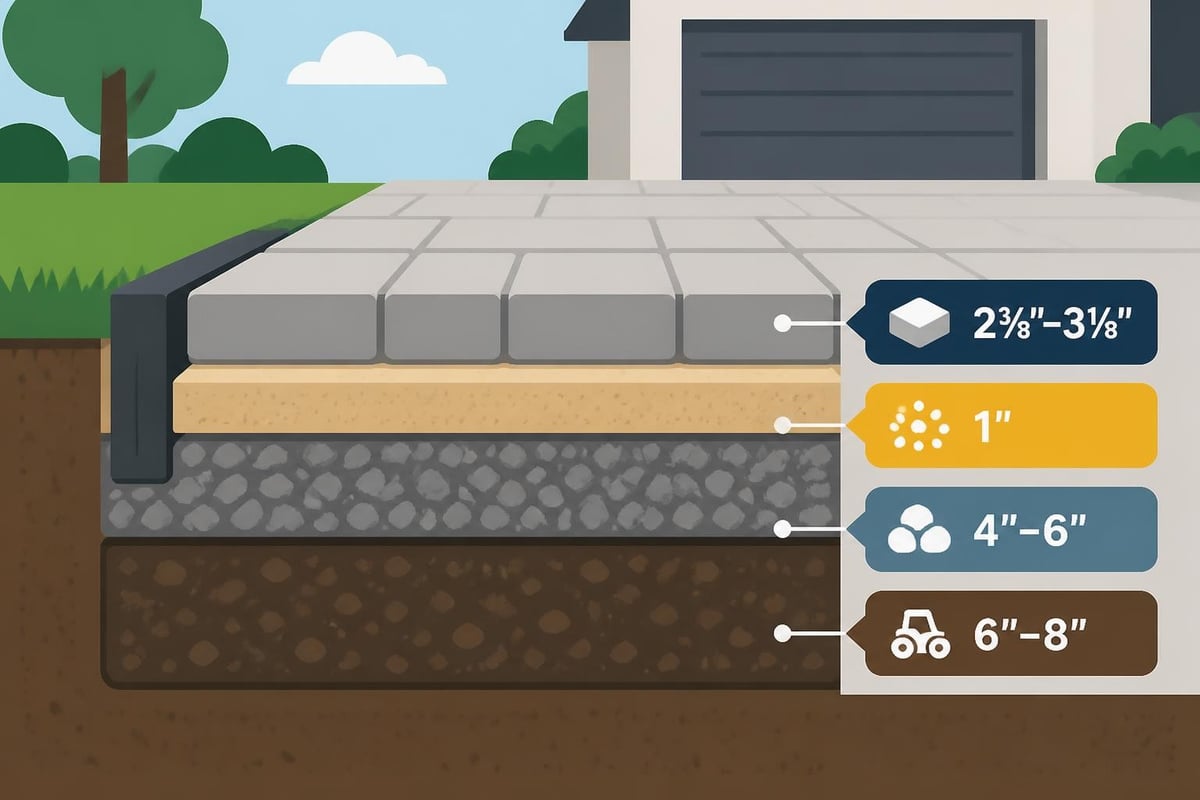
Standard passenger vehicles exert approximately 3,000 to 4,000 pounds distributed across four contact points. This concentrated weight requires pavers with minimum thickness specifications and proper base preparation. Most manufacturers recommend 60mm (approximately 2.4 inches) thickness for residential driveways, though selecting pavers based on structural performance includes evaluating density and compressive strength ratings.
Key thickness considerations:
- Residential driveways: 60mm minimum
- Heavy vehicle traffic: 80mm recommended
- Commercial applications: 80-100mm required
- Edge restraints: Critical for all installations
The base layer matters as much as paver thickness. A properly compacted aggregate base of 6-8 inches provides load distribution and prevents settling. Florida's sandy soils require particular attention to base stabilization to maintain driveway integrity over time.
Concrete Pavers: Versatility Meets Value
Concrete pavers dominate the residential driveway market due to manufacturing consistency, color variety, and competitive pricing. Modern production techniques create highly durable units that resist Florida's challenging climate conditions.
Strength and Longevity Characteristics
Premium concrete pavers achieve compressive strengths exceeding 8,000 psi, surpassing poured concrete driveways. Manufacturing processes incorporate water-reducing admixtures and high-pressure compaction, producing dense units resistant to moisture penetration and freeze-thaw damage. While Central Florida rarely experiences freezing temperatures, thermal cycling between hot days and cool nights still tests material resilience.
Service life for quality concrete pavers typically ranges from 25 to 50 years with proper installation and maintenance. Color options span earth tones, grays, charcoals, and specialty finishes that mimic natural stone. Interlocking designs provide additional stability by distributing loads across multiple units.
| Concrete Paver Specs | Standard Range | Premium Options |
|---|---|---|
| Compressive Strength | 6,000-8,000 psi | 8,000-10,000 psi |
| Thickness | 60mm | 80mm |
| Color Retention | 10-15 years | 20+ years |
| Cost per SF | $8-12 | $12-18 |
Maintenance and Restoration Potential
Concrete pavers respond exceptionally well to professional restoration services. Over years of exposure, efflorescence, staining, and color fading naturally occur. Paver restoration and maintenance revives original appearance through pressure washing, polymeric sand replacement, and protective sealing. This restoration capability extends functional life and preserves aesthetic appeal far beyond alternatives like stamped concrete.
Regular sealing every 2-3 years protects against oil stains, prevents weed growth in joints, and enhances color vibrancy. The modular nature of pavers allows individual unit replacement if damage occurs, avoiding costly full-surface repairs.
Clay Brick Pavers: Traditional Durability
Clay brick pavers offer time-tested performance backed by centuries of proven durability. These fired units bring natural earth tones and classic aesthetics to driveway paving projects while delivering exceptional longevity.
Manufacturing Process and Material Properties
Genuine clay brick pavers undergo firing at temperatures exceeding 2,000°F, vitrifying the material into an extremely hard, dense product. This manufacturing process creates through-body color that never fades, as pigmentation results from iron oxide content in the clay rather than surface treatments. Understanding different paver types and their durability helps homeowners appreciate why brick maintains appearance for 50-100 years.
Clay's natural porosity allows moisture vapor transmission while resisting liquid water absorption. This characteristic prevents surface scaling and makes brick highly resistant to staining from automotive fluids. The traditional red, brown, and tan color palette complements historical architecture and traditional home designs.
Advantages of clay brick pavers:
- Permanent through-body color
- Exceptional compressive strength (8,000-12,000 psi)
- Low moisture absorption rates
- Minimal maintenance requirements
- Heritage aesthetic appeal
Climate Compatibility for Florida Applications
Florida's subtropical climate presents unique challenges including intense UV exposure, heavy rainfall, and high humidity. Clay brick excels in these conditions due to inherent density and UV resistance. Unlike concrete pavers that may experience surface deterioration from sun exposure, brick pavers maintain structural integrity across decades of Florida weather.
Thermal expansion coefficients require proper joint spacing during installation. Professional installers account for seasonal temperature variations, maintaining consistent joint widths that accommodate expansion without buckling or lippage.
Natural Stone Pavers: Premium Performance
Natural stone pavers deliver unmatched beauty and exceptional durability for discerning homeowners. Materials like granite, bluestone, and sandstone create distinctive driveways that appreciate in value over time.
Material Selection and Performance Characteristics
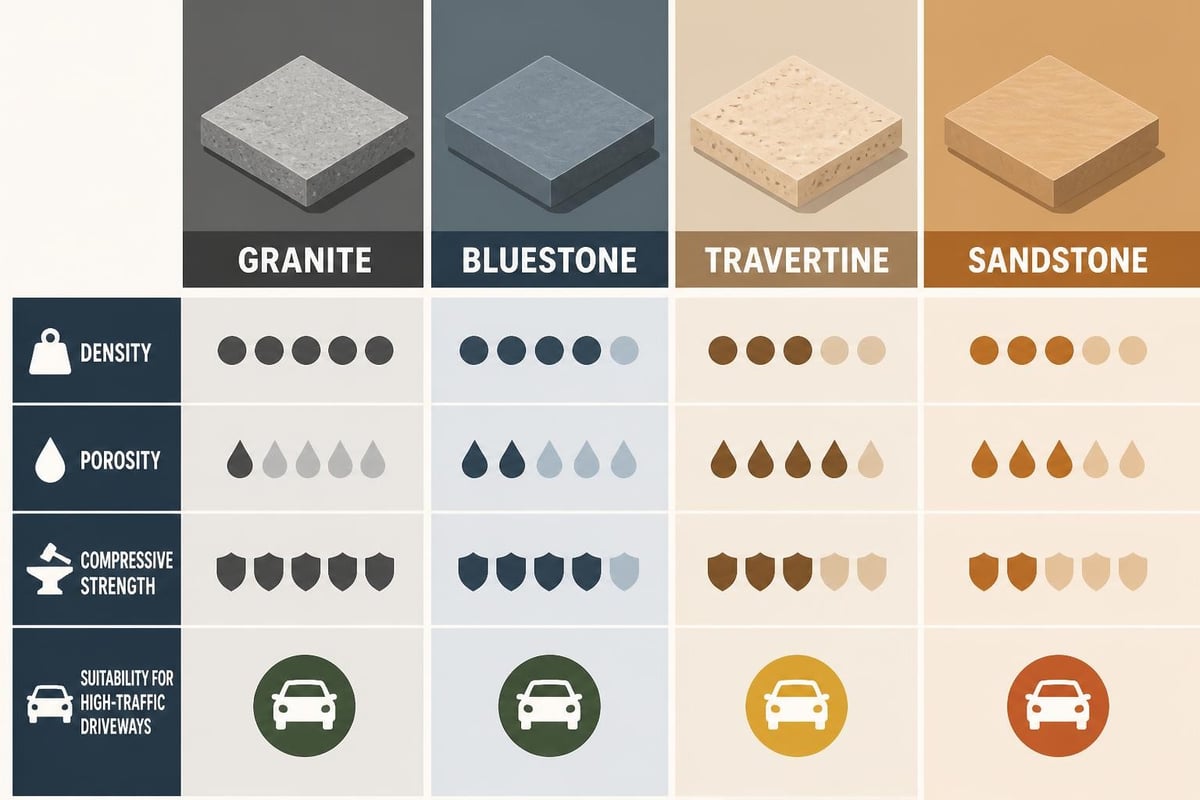
Each stone type brings unique properties to driveway applications. Granite offers supreme hardness and density, resisting scratches and weathering for 100+ years. Bluestone provides consistent coloring and natural slip resistance. Travertine creates elegant Mediterranean aesthetics but requires sealing in high-traffic areas. Selecting stone pavers for driveways involves balancing aesthetic preferences with performance requirements specific to vehicle traffic.
| Stone Type | Hardness | Porosity | Best Use | Cost Range |
|---|---|---|---|---|
| Granite | Excellent | Very Low | High-traffic | $18-30/SF |
| Bluestone | Very Good | Low | All-weather | $15-25/SF |
| Travertine | Good | Medium | Light traffic | $12-20/SF |
| Sandstone | Moderate | High | Decorative | $10-18/SF |
Natural stone's irregular surface textures provide superior traction in wet conditions compared to smooth concrete finishes. This safety advantage particularly benefits Florida driveways exposed to frequent afternoon rain showers.
Installation Complexity and Cost Considerations
Natural stone installation demands skilled craftsmanship due to dimensional variations between units. Unlike manufactured pavers with consistent dimensions, stone requires careful sorting, cutting, and fitting. This labor intensity increases installation costs but delivers irreplaceable character and visual interest.
Proper base preparation becomes even more critical with natural stone. The weight of granite or bluestone pavers requires exceptionally stable support to prevent differential settling. Experienced contractors specify geotextile fabric layers beneath aggregate bases to prevent soil migration in Florida's sandy conditions.
Porcelain Pavers: Modern Innovation
Porcelain pavers represent the latest advancement in driveway surfacing technology. These engineered units combine extreme hardness with design flexibility previously unavailable in traditional materials.
Manufacturing Technology and Performance Advantages
Porcelain pavers undergo high-pressure compaction and firing at temperatures exceeding 2,200°F, creating a vitrified body with near-zero porosity. This manufacturing process yields compressive strengths approaching 12,000 psi and flexural strength superior to natural stone. Modern digital printing technology allows manufacturers to reproduce authentic stone, wood, and custom patterns with photographic accuracy.
Key porcelain advantages:
- Virtually zero water absorption (0.5% maximum)
- Extreme scratch and abrasion resistance
- Color permanence through full-body pigmentation
- Resistance to chemicals and automotive fluids
- Minimal thickness-to-strength ratios
Porcelain's density prevents moss and algae growth common on porous surfaces in humid climates. This characteristic reduces maintenance frequency and preserves appearance without chemical treatments.
Design Flexibility and Application Range
Large-format porcelain pavers (up to 24" x 48") create contemporary designs with minimal joint lines. This aesthetic suits modern architecture while maintaining the drainage benefits of segmental pavement systems. Coordinating patios and driveways becomes seamless when using matching porcelain collections throughout outdoor living spaces.
Installation requires specialized equipment and training due to material hardness. Cutting porcelain demands diamond blades and proper technique. However, the resulting installation resists staining, weathering, and deterioration far beyond conventional materials, justifying premium investment for many homeowners.
Critical Installation Factors for Driveway Pavers
Material selection represents only part of successful driveway construction. Installation quality determines whether pavers deliver decades of service or require premature intervention.
Base Preparation and Drainage Engineering
Florida's water table and sandy soils create unique drainage challenges. Proper base construction begins with excavation to appropriate depth, typically 10-12 inches below finished grade. Geotextile fabric prevents aggregate migration into underlying soil while allowing water permeation.
Aggregate base layers utilize crushed limestone or granite with specific gradation curves. Each 2-3 inch lift undergoes mechanical compaction to 95% Proctor density before adding subsequent layers. This compaction prevents future settling that causes paver depression under vehicle loads.
Essential base components:
- Geotextile separation fabric
- 6-8 inches compacted aggregate base
- 1-inch leveling sand layer
- Minimum 2% cross-slope for drainage
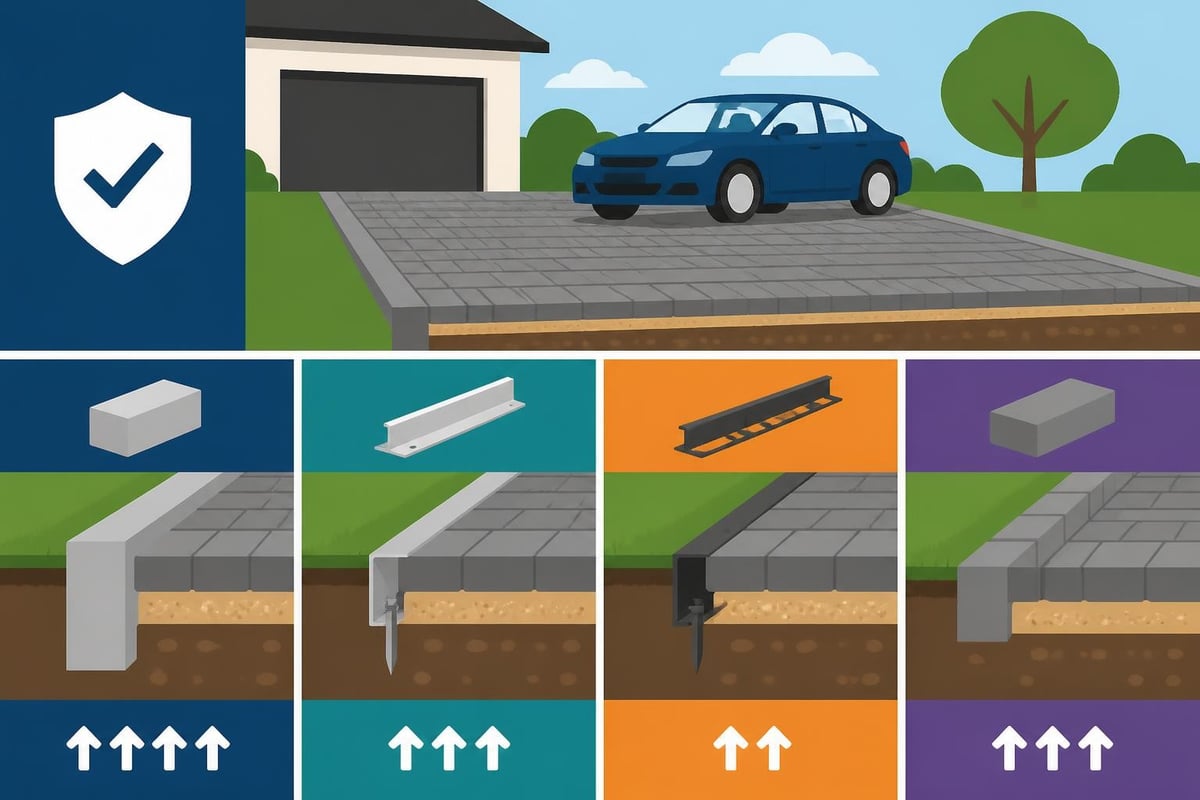
- Edge restraints along all perimeters
Drainage design must account for water volume during Central Florida's intense summer storms. Proper grading directs runoff away from structures while preventing pooling on paver surfaces. Some installations incorporate permeable joints or drainage cells beneath pavers to manage subsurface water.
Joint Stabilization and Edge Containment
Polymeric sand revolutionized paver joint stability by creating water-activated bonds between sand particles. When properly installed, polymeric sand resists erosion, prevents weed growth, and deters insect colonization. However, understanding the role of sand between pavers reveals that application technique significantly impacts performance.
Edge restraints prevent lateral paver movement under vehicle turning forces. Options include concrete curbs, aluminum or steel edging systems, and soldier course pavers set in concrete. Without proper edge containment, driveways develop spreading patterns that create trip hazards and structural failure.
Climate-Specific Considerations for Florida Driveways
Central Florida's subtropical climate demands material choices that withstand specific environmental stressors absent in northern regions. Understanding best pavers for driveways in Florida requires evaluating heat resistance, moisture management, and biological growth prevention.
Heat Resistance and Thermal Properties
Summer surface temperatures on Florida driveways regularly exceed 140°F on dark-colored pavers. This extreme heat creates thermal expansion that poorly designed installations cannot accommodate. Material selection should consider solar reflectance index (SRI) values, with lighter colors reflecting more heat and reducing barefoot burn risk.
Certain materials expand more than others under thermal stress. Concrete and porcelain pavers exhibit relatively low expansion coefficients, while some natural stones require wider joints to prevent buckling. Professional installation accounts for these material properties through proper joint spacing and expansion allowances at transitions.
Moisture Management and Biological Growth
Annual rainfall in Central Florida averages 50-55 inches, concentrated in summer months. This moisture creates ideal conditions for algae, moss, and mold growth on paver surfaces. Material porosity directly correlates with biological growth susceptibility. Dense materials like porcelain and properly sealed concrete resist colonization, while porous sandstone may require frequent cleaning.
Proper drainage prevents standing water that accelerates biological growth and undermines base stability. Cross-slopes of 2-3% direct water away from structures while maintaining comfortable driveway access. Some homeowners incorporate drainage channels or French drains alongside driveways in particularly wet areas.
Comparing Cost and Value Across Paver Types
Initial material costs represent one component of total ownership expense. Evaluating the best pavers for driveway applications requires analyzing installation complexity, maintenance frequency, longevity, and potential resale value impact. Comparing driveway paver materials comprehensively reveals total cost of ownership over expected service life.
Material and Installation Cost Analysis
Basic concrete pavers offer the most accessible entry point, with materials ranging from $8-15 per square foot depending on style complexity. Professional installation typically adds $6-10 per square foot, bringing total project costs to $14-25 per square foot. Clay brick prices start around $10-12 per square foot for materials, with installation costs similar to concrete.
Natural stone commands premium pricing, with granite and bluestone materials alone ranging from $15-30 per square foot. Installation complexity increases labor costs to $10-15 per square foot, resulting in total project costs of $25-45 per square foot. Porcelain pavers price similarly to premium natural stone but require specialized installation expertise.
| Paver Type | Material Cost/SF | Installation Cost/SF | Total Cost/SF | Expected Lifespan |
|---|---|---|---|---|
| Concrete | $8-15 | $6-10 | $14-25 | 25-50 years |
| Clay Brick | $10-12 | $6-10 | $16-22 | 50-100 years |
| Natural Stone | $15-30 | $10-15 | $25-45 | 50-100+ years |
| Porcelain | $18-28 | $10-15 | $28-43 | 50+ years |
Long-Term Maintenance and Lifecycle Costs
Maintenance requirements vary significantly across paver types. Concrete pavers benefit from sealing every 2-3 years at approximately $1.50-2.50 per square foot. Clay brick requires minimal maintenance beyond occasional cleaning, though joint sand replenishment occurs every 5-10 years. Natural stone needs periodic sealing depending on porosity, while porcelain requires only routine cleaning.
Over a 30-year ownership period, lower-cost concrete pavers may require complete restoration or replacement, while premium materials like brick or granite maintain integrity with minimal intervention. This longevity factors into total cost of ownership calculations for homeowners planning extended residence.
Aesthetic Considerations and Design Integration
Driveway pavers significantly impact curb appeal and property value. Material selection should complement architectural style while meeting functional requirements. Modern paver installation projects increasingly incorporate multiple materials or patterns to create visual interest.
Color Selection and Pattern Options
Color psychology influences perceived property value and neighborhood harmony. Traditional red brick suits Colonial and Georgian architecture, while gray and charcoal concrete pavers complement contemporary designs. Natural stone's color variation creates organic aesthetics appropriate for Mediterranean and Craftsman homes.
Laying patterns affect both appearance and structural performance. Herringbone patterns provide maximum interlock for vehicle traffic, while running bond creates linear visual flow. Understanding paver laying patterns helps optimize driveway durability while achieving desired aesthetics.
Popular driveway patterns:
- Herringbone (45° or 90°): Maximum interlock, best for turning areas
- Running bond: Simple installation, clean linear appearance
- Basketweave: Traditional charm, moderate interlock
- Random ashlar: Natural stone aesthetic, custom appearance
Border treatments frame driveway edges and create definition against landscape areas. Soldier courses using contrasting colors or materials establish formal boundaries while improving edge stability.
Coordinating Hardscape Elements
Successful outdoor design coordinates driveways with walkways, patios, and other hardscape features. Using matching or complementary materials throughout creates cohesive visual flow. Some homeowners select identical pavers for all hardscape areas, varying only laying patterns to distinguish spaces. Others use coordinating color families across different materials to achieve subtle variation.
Transition details between driveways and garage floors, sidewalks, or street surfaces require careful planning. Professional installers create smooth transitions that prevent trip hazards while maintaining proper drainage patterns. These details distinguish quality installations from amateur work.
Making the Final Selection
Choosing the best pavers for driveway applications involves balancing multiple competing factors. Budget constraints, aesthetic preferences, climate considerations, and maintenance willingness all influence optimal material selection. Creating a decision matrix helps quantify priorities and compare options objectively.
Decision Framework and Priority Ranking
Start by establishing non-negotiable requirements. Does your vehicle weight exceed standard passenger car loads? Do you require specific color matching to existing hardscape? Is minimizing maintenance a top priority? Identifying these critical factors eliminates incompatible options early in the selection process.
Next, rank secondary considerations like initial cost, aesthetic flexibility, and installation timeline. Assigning numerical weights to each factor allows objective comparison across material options. Choosing the right paver for your driveway becomes clearer when preferences and constraints are quantified systematically.
Professional Consultation and Sample Evaluation
Physical samples reveal characteristics photographs cannot capture. Visiting supplier showrooms or viewing installed projects demonstrates how materials weather, accumulate dirt, and respond to cleaning. Comparing samples in your driveway location shows how natural light affects color perception throughout the day.
Consulting experienced contractors provides insight into material performance specific to your property conditions. Soil composition, drainage patterns, sun exposure, and existing hardscape influence which materials deliver optimal results. Contractors familiar with Central Florida conditions offer valuable guidance on climate-appropriate selections.
Selecting the best pavers for your driveway requires evaluating material durability, climate compatibility, maintenance requirements, and aesthetic goals specific to Central Florida conditions. Whether you choose versatile concrete, timeless brick, premium natural stone, or innovative porcelain, proper installation and ongoing care ensure decades of reliable performance. Pink Palm Pavers brings licensed, insured expertise to every driveway project across Central Florida, from initial design consultation through professional installation and long-term maintenance. Contact our family-owned team today to explore material options and receive your free on-site estimate for a driveway that enhances your home's value and curb appeal.

