

Selecting the right brick paver colors transforms ordinary outdoor spaces into stunning landscapes that enhance property value and curb appeal. Homeowners in Central Florida face unique considerations when choosing paver colors, from intense sunlight exposure to architectural styles prevalent throughout the region. Understanding how different hues interact with your home's exterior, landscaping, and the natural environment ensures a cohesive design that stands the test of time. Whether you're planning a new paver installation or refreshing an existing hardscape, the color choices you make today will define your outdoor aesthetic for decades to come.
Understanding Brick Paver Color Fundamentals
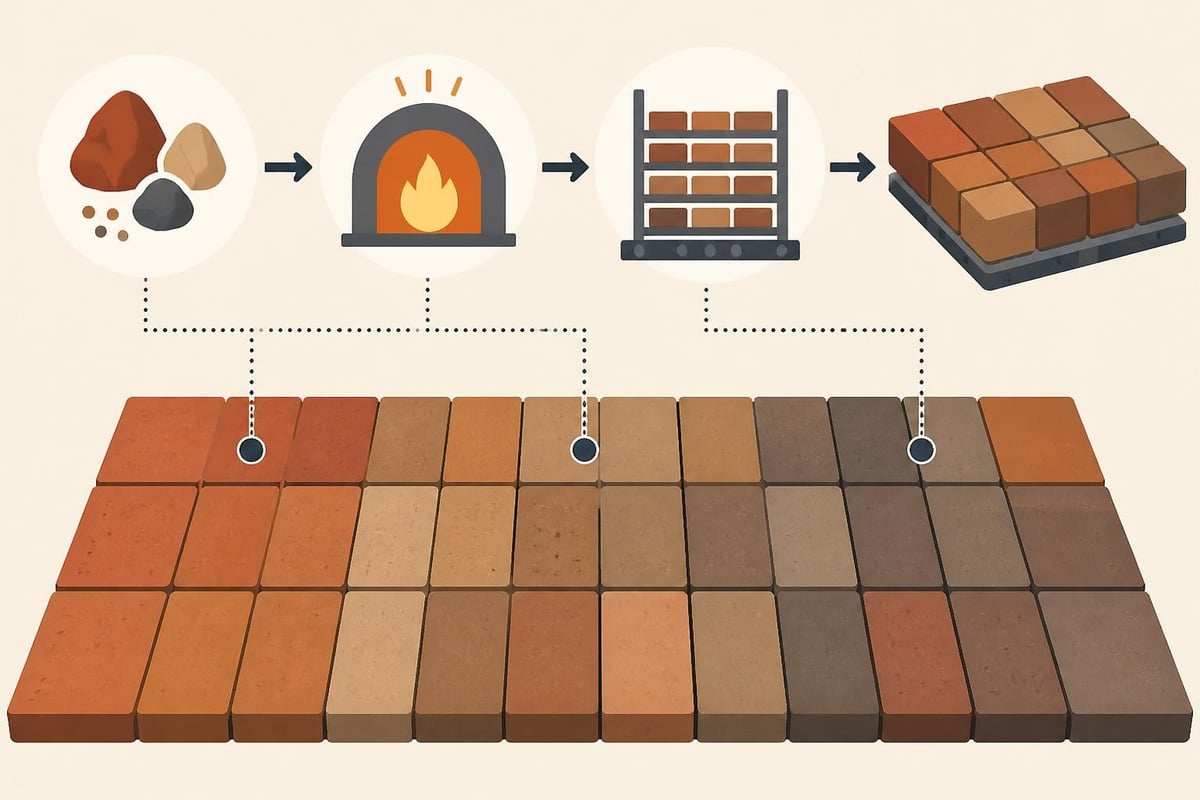
The science behind brick paver colors stems from natural mineral content and manufacturing processes. Clay pavers derive their hues from iron oxide levels and kiln-firing temperatures, creating a spectrum from cream and salmon to deep burgundy and charcoal. Concrete pavers offer even broader color possibilities through added pigments and surface treatments.
Color permanence varies significantly between materials. Clay brick pavers maintain their color throughout the entire unit because the hue penetrates the full depth of the material. Concrete pavers typically feature color in the top layer, though modern manufacturing techniques have improved colorfastness considerably.
Natural Color Variations
Even within a single pallet of brick pavers, you'll notice slight color variations. These natural inconsistencies create visual interest and authenticity rather than detracting from the overall appearance. Professional installers mix pavers from multiple pallets during installation to distribute color variations evenly across the surface.
Key factors influencing natural variation include:
- Clay source location and mineral composition
- Kiln temperature fluctuations during firing
- Position within the kiln during manufacturing
- Age and weathering of raw materials
- Batch-to-batch production differences
Popular Brick Paver Color Categories
Traditional red pavers remain the most recognized choice for residential applications. Red brick pavers deliver timeless appeal that complements both historic and contemporary architecture. These warm tones range from soft terra cotta to deep burgundy, offering versatility across design styles.
Earth tone pavers encompassing browns, tans, and beiges create natural transitions between hardscape and landscape elements. These neutral palettes work exceptionally well in Florida environments where sandy soils and native vegetation dominate the natural landscape.
| Color Category | Common Shades | Best Applications | Architectural Matches |
|---|---|---|---|
| Traditional Reds | Brick red, burgundy, terra cotta | Driveways, walkways, patios | Colonial, traditional, craftsman |
| Earth Tones | Tan, beige, sandstone, buff | Pool decks, patios, courtyards | Mediterranean, ranch, contemporary |
| Gray Scale | Charcoal, slate, silver, pewter | Modern patios, urban driveways | Contemporary, industrial, minimalist |
| Multi-Blend | Variegated mixes of 2-4 colors | All applications | Universal compatibility |
Modern Gray and Charcoal Trends
Gray and charcoal pavers have surged in popularity throughout 2026, particularly among homeowners seeking contemporary aesthetics. Charcoal and modern grays create sophisticated outdoor spaces that pair beautifully with stainless steel outdoor kitchens, glass railings, and minimalist landscaping.
These cooler tones absorb less heat than darker reds and browns, making them practical choices for Central Florida's climate. Gray pavers also show less visible fading over time when properly sealed and maintained.
How Light and Climate Affect Color Selection
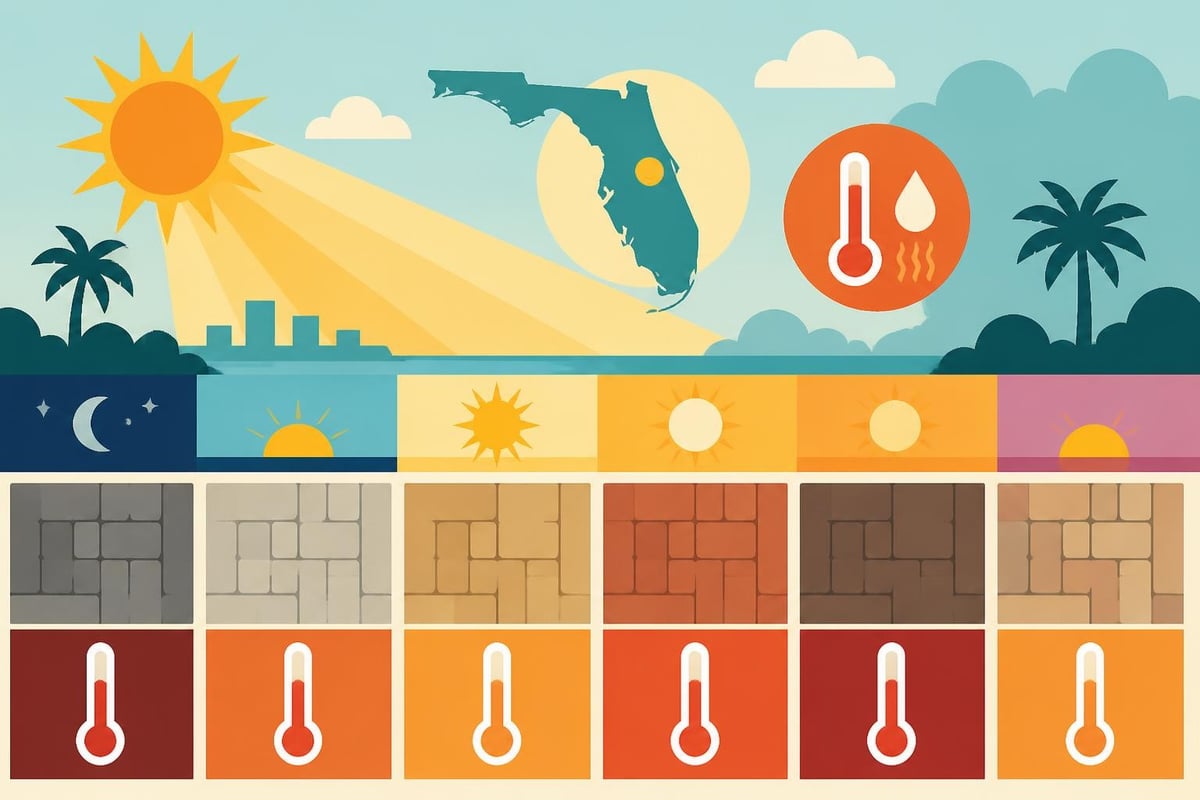
Central Florida's intense sunlight dramatically impacts how brick paver colors appear throughout the day and across seasons. Light and dark tones influence spatial perception, with lighter colors making small areas feel more expansive while darker shades create intimate, defined spaces.
Lighter paver colors reflect more sunlight, reducing surface temperatures by 10-15 degrees compared to darker alternatives. This characteristic proves particularly valuable for pool decks, patios, and other barefoot traffic areas in Florida's summer heat.
Climate considerations for color selection:
- UV exposure – Lighter colors fade less noticeably than darker options
- Heat retention – Dark colors absorb and retain more thermal energy
- Moisture visibility – Medium tones show water stains less prominently
- Algae and mildew – Lighter colors may require more frequent cleaning in humid climates
- Long-term appearance – All colors benefit from professional sealing every 2-3 years
Homeowners working with paver restoration and maintenance services often discover that proper sealing not only protects pavers but also enhances and deepens their original colors, making them appear richer and more vibrant.
Coordinating Brick Paver Colors With Home Exteriors
Successful color coordination begins with analyzing your home's existing palette. Choosing paver colors that harmonize with architectural elements creates visual flow between indoor and outdoor living spaces. Consider roof color, siding materials, trim colors, and fixed exterior features like stone veneers or brick facades.
A general principle: select paver colors within the same temperature family as your home's dominant exterior color. Warm-toned homes with beige, cream, or brown exteriors pair naturally with earth-tone and traditional red pavers. Cool-toned homes featuring gray, white, or blue elements harmonize with gray-scale and charcoal pavers.
Creating Contrast Versus Blending
Decide whether you want your hardscape to blend seamlessly with your home or create intentional contrast. Matching similar tones creates a cohesive, unified appearance that makes properties appear larger. Contrasting colors add visual interest and can highlight specific architectural features or landscape elements.
Homes in Winter Park and Maitland often feature Mediterranean and Spanish Colonial architecture that looks stunning with multi-blend pavers combining cream, tan, and terra cotta tones.
Monotone Versus Multicolored Paver Patterns
Monotone installations use pavers from a single color family to create clean, uniform surfaces. This approach suits contemporary designs and minimalist aesthetics where simplicity and order take precedence. Monotone patterns also make spaces appear larger and less busy.
Multicolored installations incorporate two to four complementary colors arranged in patterns or randomly distributed. These designs add depth, texture, and visual complexity while disguising minor imperfections or future repairs. Multicolored pavers prove especially practical for high-traffic areas where occasional staining or damage might occur.
Monotone advantages:
- Clean, sophisticated appearance
- Easier to source matching pavers for repairs
- Makes small spaces feel larger
- Emphasizes pattern over color variation
Multicolored advantages:
- Natural, organic aesthetic
- Hides stains and wear patterns
- Creates visual interest without complex laying patterns
- Offers greater design flexibility
Regional Color Preferences and Trends
Color preferences vary significantly by region based on climate, architectural traditions, and cultural influences. While specific data for Central Florida remains limited, broader southeastern trends indicate strong preference for earth tones and multi-blend pavers that complement natural surroundings.
Communities throughout Orlando, Sanford, and Clermont show increasing interest in variegated blends that transition smoothly between indoor tile flooring and outdoor hardscape surfaces. This continuity creates seamless indoor-outdoor living spaces highly valued in Florida's year-round outdoor lifestyle.
Emerging Color Combinations for 2026
Current design trends favor unexpected color pairings that break from traditional conventions. Charcoal pavers with buff-colored borders create modern frames around patios and pool decks. Terra cotta field pavers accented with slate gray borders deliver Mediterranean flair with contemporary edge.
Designers increasingly recommend selecting paver colors before finalizing landscape plant selections, allowing foliage colors to complement rather than compete with hardscape tones.
Practical Considerations Beyond Aesthetics
While visual appeal drives initial color selection, practical factors significantly impact long-term satisfaction. Surface temperature varies dramatically across brick paver colors, with dark charcoal pavers reaching 20-30 degrees hotter than light tan alternatives under direct Central Florida sunlight.
Color choices affect perceived space and ambiance in measurable ways. Lighter pavers reflect more light into adjacent interior spaces, brightening covered patios and reducing artificial lighting needs during evening gatherings.
Maintenance and Longevity Factors
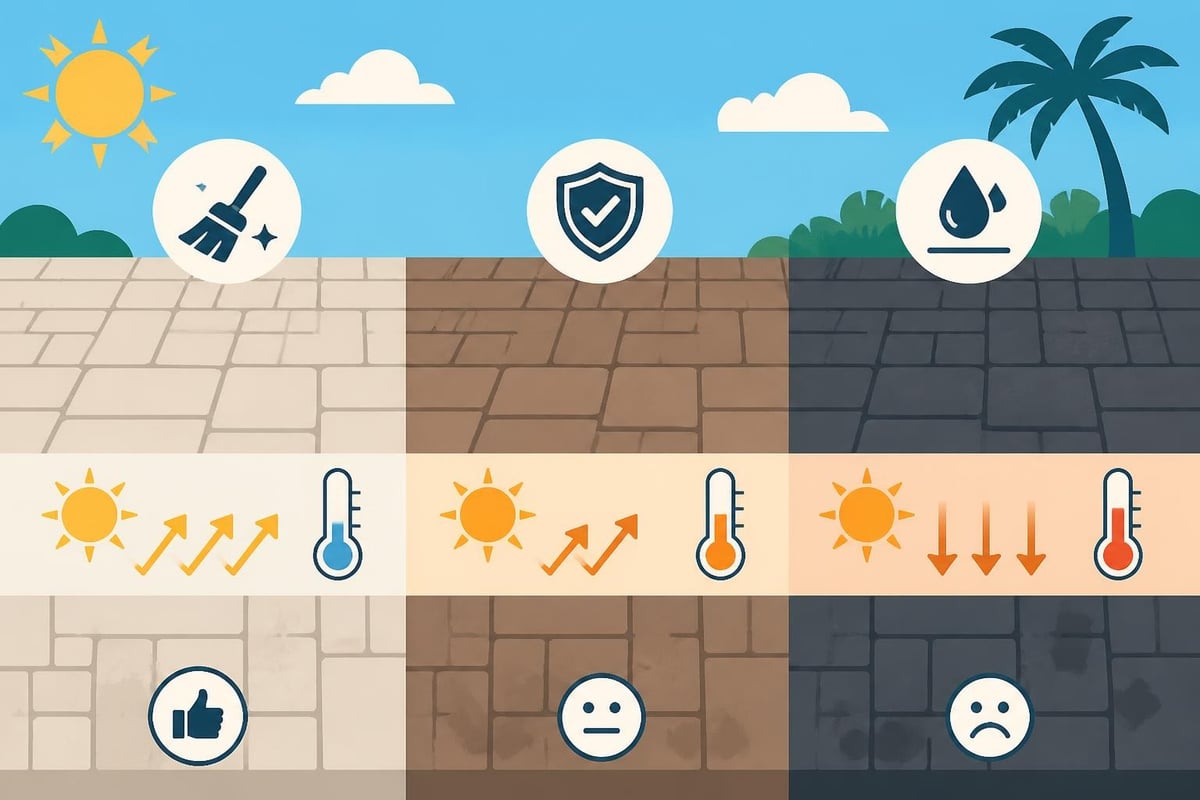
Different brick paver colors show dirt, stains, and weathering at varying rates. Very light colors may require more frequent cleaning to maintain pristine appearance, while very dark colors show pollen, dust, and efflorescence more prominently.
| Maintenance Factor | Light Colors | Medium Colors | Dark Colors |
|---|---|---|---|
| Dirt visibility | High | Low | Medium |
| Stain noticeability | Medium | Low | High |
| Fading evidence | Low | Medium | High |
| Heat buildup | Low | Medium | High |
| Cleaning frequency | Higher | Lower | Medium |
Medium-tone pavers in the tan, beige, and medium gray range typically require the least maintenance while delivering excellent long-term appearance. These practical colors remain popular across service areas throughout Central Florida for good reason.
Testing Colors Before Final Selection
Never select brick paver colors based solely on small samples viewed indoors or online images. Actual colors appear dramatically different under natural sunlight compared to showroom lighting or computer screens. Request full-size paver samples and place them in your intended installation area.
View samples at different times of day to observe how morning, midday, and evening light affects appearance. Notice how colors look when wet versus dry, as Florida's frequent afternoon showers will regularly alter your pavers' appearance. Place samples against your home's exterior walls to assess compatibility with existing colors and materials.
Sample testing checklist:
- Obtain at least three full-size pavers in your top color choices
- Place samples in actual installation location for 3-5 days
- View colors during morning, afternoon, and evening light
- Wet samples with a hose to see saturated appearance
- Photograph samples next to home exterior for reference
- Compare samples to neighboring properties if coordination matters
- Have all household decision-makers review samples in person
Border and Accent Color Strategies
Strategic use of contrasting border colors adds definition and visual interest to otherwise simple paver installations. Borders frame spaces, create transitions between different functional areas, and can make informal shapes appear more intentional and designed.
Popular border strategies include running a single-row soldier course around patio perimeters, creating double or triple-row borders in contrasting colors, or incorporating decorative corner accents. The border-to-field color relationship should maintain approximately 80/20 proportions, with the dominant field color comprising roughly 80 percent of visible surface area.
Transition Zones and Color Graduation
For larger projects incorporating multiple outdoor living zones, gradual color transitions create sophisticated flow between spaces. Start with lighter pavers near the home and gradually introduce darker tones toward landscape edges, or reverse this gradient for dramatic effect.
This technique proves particularly effective in projects combining hardscape services with extensive landscape design, where pavers need to complement multiple material types and plant palettes.
Working With Existing Landscape Elements
Brick paver colors should harmonize with permanent landscape features including existing trees, stone walls, water features, and architectural elements. Large trees with distinctive bark colors influence which paver tones work best. Oak trees with gray-brown bark complement gray-scale pavers, while palms with tan trunks pair naturally with earth-tone selections.
Consider seasonal color changes in your landscape. Deciduous plants that drop colorful leaves in fall may clash with certain paver choices during specific seasons. Evergreen landscapes offer more consistent backdrops that simplify color coordination.
Landscape coordination factors:
- Dominant tree bark colors
- Mulch and groundcover tones
- Existing stone or brick features
- Pool coping and deck materials
- Fence and railing colors
- Outdoor furniture selections
The Role of Sealing in Color Enhancement
Professional sealing dramatically impacts final brick paver colors, typically enriching tones and adding depth similar to how water temporarily darkens pavers. Sealers come in various finishes from natural matte to high-gloss wet looks, each affecting color appearance differently.
Matte sealers preserve the most natural appearance while providing protection against staining, weed growth, and erosion. Semi-gloss sealers modestly enhance colors without creating overly shiny surfaces. High-gloss wet-look sealers deliver the most dramatic color intensification but may appear too formal for some applications.
Testing sealer finishes on sample pavers before committing to full-scale application prevents costly disappointments and ensures the sealed result matches your vision.
Making the Final Color Decision
After analyzing all factors-home exterior colors, climate considerations, maintenance preferences, and personal style-narrow choices to two or three finalists. Create a decision matrix weighing each factor's importance to your specific situation.
Decision matrix example:
| Factor | Weight | Color Option A | Color Option B | Color Option C |
|---|---|---|---|---|
| Home coordination | High | 9/10 | 7/10 | 8/10 |
| Heat management | High | 8/10 | 6/10 | 7/10 |
| Maintenance ease | Medium | 7/10 | 9/10 | 8/10 |
| Personal preference | High | 8/10 | 9/10 | 7/10 |
| Budget impact | Low | 8/10 | 8/10 | 7/10 |
Assign numerical scores to each finalist across all important factors, multiply by importance weights, and total the scores. This systematic approach removes emotion from decision-making while ensuring practical considerations receive appropriate emphasis.
Remember that brick paver colors represent long-term investments. While trendy colors may appeal initially, classic choices typically deliver greater long-term satisfaction and broader appeal should you eventually sell your property. Understanding popular color trends helps inform decisions without dictating them.
Color Considerations for Specific Applications
Different hardscape applications benefit from specific color strategies based on functional requirements and aesthetic goals. Driveways endure heavy vehicle traffic, oil drips, and tire marks, making medium-tone multicolored pavers the most practical choice for concealing inevitable wear.
Patios and outdoor living spaces allow greater color freedom since they experience lighter traffic and easier maintenance access. These areas suit both monotone contemporary palettes and richly variegated traditional blends depending on architectural style and personal preference.
Pool decks demand careful color selection balancing aesthetics with safety and comfort. Lighter colors reduce surface temperatures for barefoot traffic while minimizing glare reflection off water surfaces. Avoid very dark colors that become uncomfortably hot and very light colors that create excessive glare.
Application-specific color guidance:
- Driveways: Medium earth tones, multicolored blends, traditional reds
- Patios: Any color family based on coordination and style preferences
- Walkways: Colors matching or coordinating with driveway and patio selections
- Pool decks: Light to medium tones in tan, gray, or coral for heat management
- Retaining walls: Typically match or slightly contrast field paver colors
Homeowners in Apopka and surrounding communities often combine multiple paver applications in comprehensive outdoor living projects, requiring careful color coordination across all elements for unified design.
Choosing the right brick paver colors involves balancing aesthetic preferences with practical considerations specific to Central Florida's climate and your property's unique characteristics. By understanding how colors interact with sunlight, complement architectural elements, and perform over time, you can confidently select pavers that enhance your outdoor spaces for decades. When you're ready to transform your vision into reality with expertly installed, beautifully coordinated hardscaping, Pink Palm Pavers brings the experience, craftsmanship, and local knowledge to deliver exceptional results backed by our 2-year warranty.

