

Creating an inviting outdoor living area starts with choosing the right foundation, and pavers on a patio offer homeowners unmatched durability, design flexibility, and long-term value. Unlike poured concrete or natural stone slabs, individual paver units interlock to create surfaces that adapt to ground movement, resist cracking, and allow for easy repairs when needed. Whether you're planning a modest seating area or an expansive entertainment space in Central Florida's climate, understanding how pavers perform, how they're installed, and what maintenance they require will help you make informed decisions that enhance your property for decades.
Why Choose Pavers for Patio Construction
Pavers deliver exceptional performance in residential hardscaping because they distribute weight across individual units rather than relying on a monolithic slab. This structural advantage matters especially in regions with sandy soils or seasonal ground movement.
Structural Benefits and Longevity
When properly installed, pavers on a patio create a flexible pavement system that accommodates minor ground shifts without surface damage. Each unit can move independently within millimeters, preventing the stress cracks common in concrete slabs.
Key structural advantages include:
- Load distribution: Weight spreads across multiple joints rather than stressing single points
- Drainage management: Permeable joints allow water to filter through when combined with appropriate base materials
- Repair accessibility: Individual damaged units can be replaced without disturbing the entire surface
- Expansion tolerance: Natural thermal expansion occurs at joints rather than creating control cracks
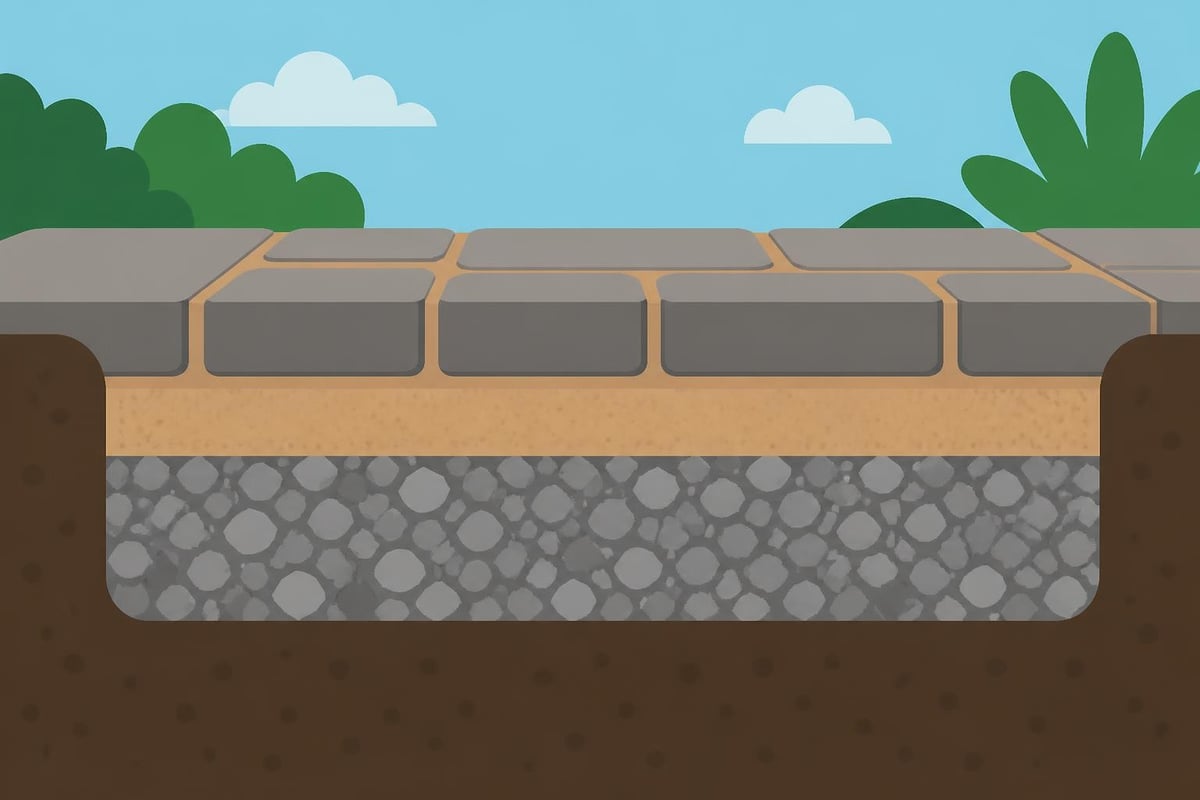
The base layers beneath the visible surface do the heavy lifting. A properly compacted aggregate base, typically 4-6 inches deep for residential patios, provides stability and drainage. The bedding sand layer, usually one inch thick, creates a level surface that allows installers to seat each paver at precisely the right elevation.
Material Options and Design Considerations
The appearance and performance of pavers on a patio depend heavily on material selection. Each option brings distinct characteristics in terms of color retention, slip resistance, and maintenance requirements.
| Material Type | Durability | Color Options | Maintenance Level | Best Use Case |
|---|---|---|---|---|
| Concrete | 25-50 years | Wide variety | Low-Medium | High-traffic entertaining areas |
| Clay Brick | 50-100 years | Earth tones | Low | Traditional aesthetics, walkways |
| Natural Stone | 50+ years | Natural variation | Medium | Premium installations, pool decks |
| Porcelain | 50+ years | Extensive | Very Low | Modern designs, low-maintenance needs |
Choosing Pavers for Florida's Climate
Central Florida's combination of intense UV exposure, heavy rainfall, and high humidity demands materials engineered for these conditions. Concrete pavers manufactured for the region typically include UV stabilizers and higher compressive strength ratings (8,000+ PSI) compared to northern products.
Color selection affects more than aesthetics. Lighter colors reflect heat and stay cooler underfoot near pool areas, while darker tones can become uncomfortable during peak summer months. The outdoor stone you select should balance visual appeal with practical comfort for barefoot use.
Pattern choice influences both appearance and structural performance. Running bond patterns (like traditional brickwork) provide excellent interlock and distribute loads effectively. Herringbone patterns, installed at 45 or 90 degrees, offer maximum resistance to shifting and work well for driveways that see vehicular traffic. Random patterns create visual interest but require more skilled installation to maintain proper joint spacing.
Installation Process and Base Preparation
The success of pavers on a patio hinges on proper base preparation more than any other factor. Shortcuts during excavation and compaction lead to settling, uneven surfaces, and premature failure regardless of paver quality.
Critical Steps for Lasting Performance
Professional installation begins with accurate site assessment. Soil type, drainage patterns, and proximity to structures all influence base design. Sandy soils drain well but require deeper aggregate bases for stability. Clay soils hold water and need enhanced drainage features.
The standard installation sequence:
- Excavation: Remove soil to required depth (typically 8-10 inches total for patios)
- Grade establishment: Create slight slope (1-2% grade) away from structures for water runoff
- Base installation: Place and compact aggregate in 2-3 inch lifts using plate compactor
- Edge restraint: Install rigid edging (plastic, aluminum, or concrete) to contain pavers
- Bedding layer: Screed one inch of coarse sand to create level surface
- Paver placement: Set units according to pattern, maintaining consistent joint spacing
- Joint filling: Sweep polymeric or silica sand into joints and compact surface
- Sealing: Apply penetrating sealer to protect surface and enhance color
Edge restraint deserves special attention because it prevents lateral movement over time. Without proper edging, pavers gradually spread apart as people walk near perimeter areas. For homeowners interested in professional results, paver installation services ensure every layer meets engineering standards for long-term performance.
The compaction process requires multiple passes with appropriate equipment. Hand tampers work for small repairs, but professional plate compactors running at 4,000-5,000 vibrations per minute properly consolidate base materials. Each aggregate lift should be compacted before adding the next layer.
Permeable Paver Systems for Water Management
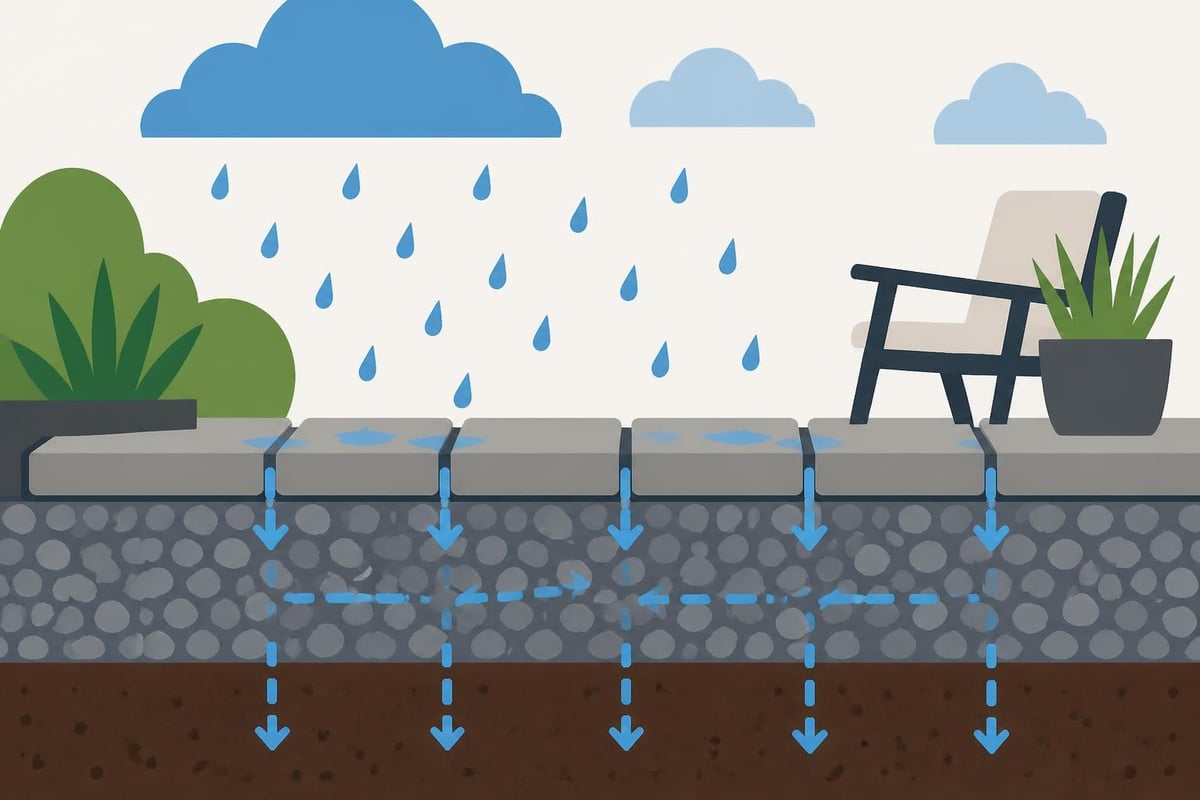
As stormwater management becomes increasingly important, permeable pavers on a patio offer environmental benefits alongside aesthetic appeal. These systems allow rainfall to infiltrate through joints and specialized base materials rather than running off into storm drains.
The EPA recognizes permeable pavement as an effective best management practice for reducing runoff volume and improving water quality. By capturing and filtering rainwater where it falls, permeable systems reduce flooding risks and recharge groundwater supplies.
Design Requirements for Permeable Installation
Permeable pavers require modified base construction compared to traditional installations. The aggregate base uses clean, angular stone (typically #57 or #8) with minimal fines that would clog void spaces. This open-graded base creates a reservoir that temporarily stores water before it infiltrates into native soil.
Joint spacing increases slightly to allow water passage. Instead of tight-fitting joints, permeable systems maintain 3-8mm gaps filled with specialized permeable joint aggregate. Some manufacturers produce pavers with built-in spacer bars that automatically create proper joint widths.
According to construction specifications from Minnesota’s stormwater program, proper installer training and inspection protocols ensure systems perform as designed. Subgrade soil must have adequate infiltration rates (typically 0.5 inches per hour minimum) or installations require underdrain systems to convey water away from foundations.
Maintenance Requirements and Long-Term Care
Well-maintained pavers on a patio retain their appearance and structural integrity for decades. The maintenance burden remains relatively light compared to wood decking or stamped concrete, but consistent attention prevents small issues from becoming expensive repairs.
Routine Cleaning and Preservation
Daily use deposits organic matter, soil, and other debris that accumulates in joints and on surfaces. Regular sweeping with a stiff broom removes loose material before it breaks down and stains paver surfaces. For Central Florida homeowners, monthly cleaning during rainy season prevents algae and mildew growth that creates slippery surfaces.
Essential maintenance tasks and frequency:
- Weekly sweeping of high-traffic areas
- Monthly washing with garden hose or pressure washer (low pressure, wide fan)
- Quarterly inspection of joint sand levels and edge restraints
- Annual professional cleaning and sealing for optimal protection
- Immediate spot treatment of oil stains, rust, or organic stains
Pressure washing effectively removes embedded dirt but requires proper technique. Holding the nozzle too close or using excessive pressure erodes joint sand and damages paver surfaces. Professional equipment delivers appropriate pressure (1,200-1,500 PSI for pavers) with correct nozzle selection to clean without causing damage.
Joint sand maintenance directly affects paver stability. As sand washes away or breaks down, pavers can shift and create uneven walking surfaces. Modern polymeric sands harden when activated with water, creating a semi-rigid joint that resists erosion better than traditional silica sand. Homeowners should inspect joint levels annually and add material as needed, especially after heavy rain events.
Sealing Benefits and Application
Applying penetrating sealers to pavers on a patio provides multiple benefits beyond enhanced appearance. Quality sealers penetrate paver surfaces to create a protective barrier that repels water, resists staining, and inhibits weed growth in joints. Color-enhancing sealers restore faded pigments and create a subtle sheen that highlights pattern details.
Sealer selection depends on desired appearance and performance characteristics. Penetrating sealers provide protection without changing surface appearance significantly. Film-forming sealers create a glossy finish but may require more frequent reapplication as foot traffic wears the surface layer. For detailed information on protection options, review resources about the best rated paver sealer products available.
Application timing matters for sealer performance. New installations should cure for 60-90 days before sealing, allowing efflorescence (white salt deposits) to appear and be cleaned away. Resealing frequency depends on traffic levels and product type, typically ranging from every 2-5 years for residential patios.
Common Problems and Solutions
Even properly installed pavers on a patio can develop issues over time. Understanding common problems helps homeowners address them promptly before minor concerns become major projects.
Settling and Uneven Surfaces
Localized settling typically results from inadequate base compaction, erosion of base materials, or concentrated water infiltration. Small depressions (less than 1 inch) often appear near edges or where downspouts discharge onto paver surfaces.
Repair involves removing affected pavers, adding and compacting base material to restore proper grade, then reinstalling units with fresh bedding sand. For areas exceeding several square feet, professional assessment ensures underlying drainage issues are identified and corrected.
Weed Growth and Organic Intrusion
Despite proper joint filling, weed seeds eventually find their way into paver joints. Organic matter breaks down joint sand over time, creating growing medium for opportunistic plants. Prevention through proper sealing and polymeric sand installation works better than reactive treatments.
When weeds appear, remove them promptly including roots. Avoid chemical herbicides near water features or drainage areas. After removal, clean joints and refill with fresh polymeric sand to prevent recurrence. The sand between pavers plays a critical role in preventing both weeds and insect colonization.
Staining and Discoloration
Different stain types require specific treatment approaches. Organic stains (leaves, berries, algae) respond to oxygen-based cleaners. Rust stains need acidic treatments. Oil and grease require degreasing agents followed by absorbent materials like kitty litter to draw residual oils from porous surfaces.
Testing cleaning products on inconspicuous areas prevents unintended damage. Some aggressive acids can etch paver surfaces or alter colors permanently. Professional cleaning services have experience matching treatment methods to specific stain types and paver materials.
Design Integration with Landscape Features
Pavers on a patio function best when integrated thoughtfully with surrounding landscape elements. Transitions between paved and planted areas, coordination with architectural features, and circulation patterns all contribute to cohesive outdoor living design.
Creating Functional Zones
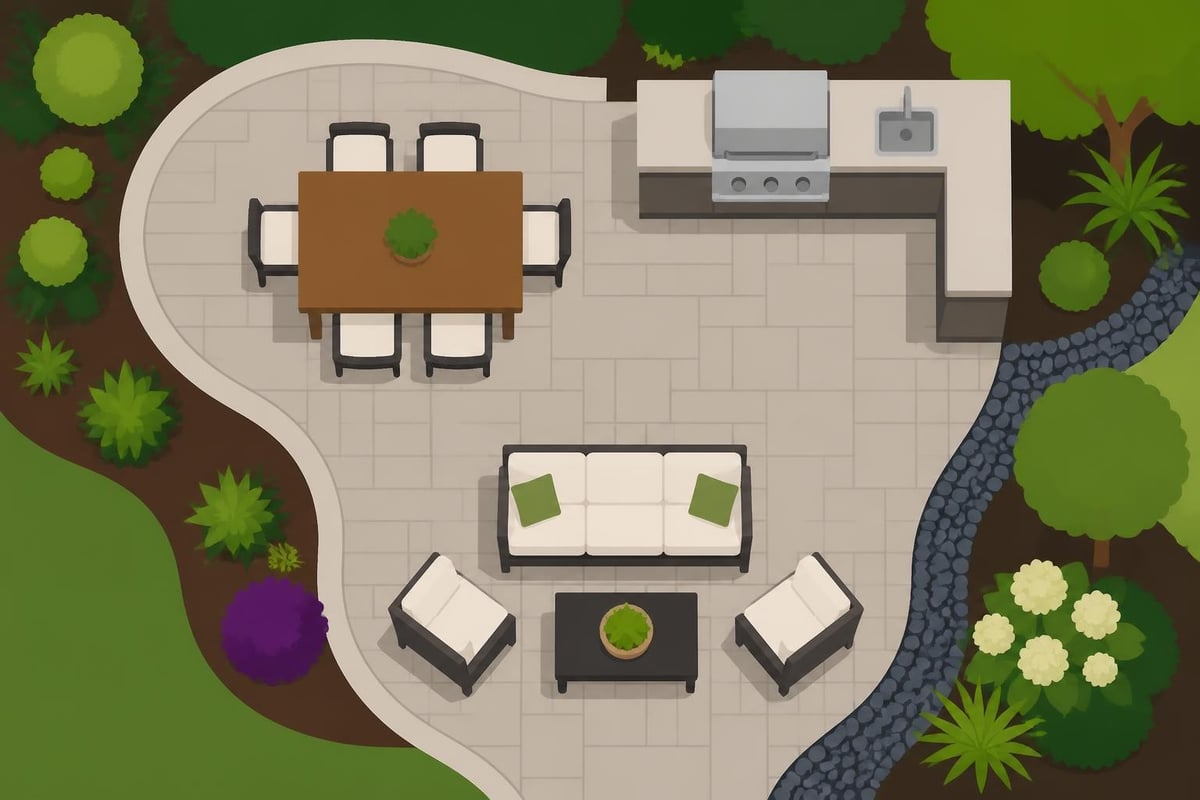
Successful patio designs define distinct activity areas through material changes, level variations, or pattern shifts. Dining areas benefit from level surfaces sized appropriately for table and chair arrangements plus circulation space. Conversation areas can use curved borders or accent patterns to create intimate gathering spots.
Incorporating pavers in a garden setting requires attention to drainage and root management. Trees planted too close to paved areas eventually lift pavers as root systems expand. Maintain minimum 10-foot spacing between large trees and patio edges, or use root barriers during installation to direct growth away from hardscape areas.
Fire features, built-in seating, and outdoor kitchens all impose specific requirements on paver layouts. Heat-generating elements need non-combustible surroundings and proper clearances. Built-in features require reinforced bases that won't settle under concentrated loads.
Regional Considerations for Central Florida
Installing and maintaining pavers on a patio in Central Florida presents unique challenges and opportunities compared to other climates. Understanding these regional factors helps homeowners make better decisions about materials, drainage, and care routines.
Climate-Specific Installation Factors
Florida's sandy soils drain quickly but provide less structural support than clay-based soils common in other regions. This characteristic requires attention to base depth and compaction standards. The Concrete Masonry & Hardscapes Association provides technical guidance on construction standards that address various soil conditions and climate zones.
Heavy rainfall during summer months tests drainage design. Patios should slope away from structures at minimum 2% grade (2 feet per 100 feet of run). In areas prone to standing water, consider enhanced drainage features like French drains or collection systems that direct runoff to appropriate discharge points.
Hurricane-force winds can dislodge lightweight patio furniture and planters that impact paver surfaces. While pavers themselves resist wind damage, proper edge restraint installation prevents units from shifting when struck by flying debris or when water ponds temporarily during extreme weather events.
Maintenance in High-Humidity Environments
Central Florida's humidity accelerates algae, mildew, and moss growth on shaded paver surfaces. Regular cleaning prevents buildup that creates slip hazards and degrades joint materials. Trimming overhanging vegetation improves air circulation and sunlight exposure that naturally inhibit microbial growth.
Salt air near coastal areas can affect certain natural stone materials. Limestone and travertine may etch or discolor with prolonged exposure. Concrete and clay pavers generally perform well in coastal environments when properly sealed and maintained. Homeowners throughout Pink Palm Pavers’ service areas in Central Florida benefit from material recommendations based on specific microclimates and site conditions.
Cost Factors and Value Considerations
Understanding the total investment required for pavers on a patio helps homeowners budget appropriately and evaluate return on investment. Initial installation costs represent only part of the financial picture when life-cycle costs and property value impact are considered.
Installation Investment Components
Material costs vary widely based on paver type, manufacturer, and design complexity. Standard concrete pavers range from $3-8 per square foot for materials alone. Premium natural stone can exceed $15-25 per square foot. These figures exclude installation labor, base materials, and site preparation.
Professional installation typically adds $8-15 per square foot depending on project complexity, site accessibility, and regional labor rates. Complex patterns, extensive grading work, or difficult access increase labor costs. Projects requiring retention wall integration or extensive drainage modifications add engineering and construction expenses.
| Cost Component | Budget Range | Mid-Range | Premium |
|---|---|---|---|
| Paver materials | $3-8/sq ft | $8-12/sq ft | $12-25+/sq ft |
| Base materials | $1-2/sq ft | $2-3/sq ft | $3-4/sq ft |
| Installation labor | $5-8/sq ft | $8-12/sq ft | $12-18/sq ft |
| Edging & restraint | $3-5/linear ft | $5-8/linear ft | $8-12/linear ft |
| Sealing (initial) | $0.50-1/sq ft | $1-1.50/sq ft | $1.50-2.50/sq ft |
Long-Term Value and Return
Quality paver patios deliver strong returns on investment through enhanced property appeal and functional outdoor living space. Real estate professionals consistently note that well-designed hardscaping ranks among the top exterior improvements for buyer interest and perceived value.
Unlike wood decks that require regular staining and eventual replacement, properly installed pavers on a patio maintain functionality and appearance for decades with minimal maintenance investment. Annual cleaning and periodic sealing cost significantly less than deck refinishing or concrete resurfacing projects.
The modular nature of paver systems allows future modifications without complete reconstruction. Expanding an existing patio, adding focal points, or reconfiguring layout patterns becomes feasible because individual units can be removed and reinstalled. This adaptability adds long-term value for homeowners whose outdoor living needs evolve over time.
Advanced Installation Techniques
Professional installers employ specialized techniques that extend beyond basic paver placement. These advanced methods improve performance, enhance appearance, and solve site-specific challenges that standard approaches cannot address adequately.
Slope Management and Drainage Integration
Sites with challenging topography require careful grade management. Terracing with multiple patio levels connected by steps creates usable space on sloped lots while controlling water flow. Each terrace needs independent drainage designed to prevent water from cascading across paver surfaces.
Integrating drainage channels within paver fields handles concentrated water flow. Linear drains installed along patio edges or across surface areas capture runoff before it reaches structures. Washington State’s Low Impact Development guidance provides technical resources for incorporating green infrastructure elements alongside traditional drainage approaches.
Pattern Transitions and Borders
Skilled installers create visual interest through pattern changes and contrasting border courses. Soldier courses (pavers oriented perpendicular to field pattern) define edges cleanly and strengthen perimeter zones. Inset patterns using contrasting colors or sizes create medallions or geometric features that serve as focal points.
Curved edges require cutting individual pavers to maintain consistent joint spacing while following radius lines. Professional wet saws with diamond blades produce clean cuts that preserve structural integrity. Hand-cutting with masonry chisels works for occasional adjustments but lacks the precision needed for extensive curved work.
Health and Safety Considerations
Creating safe outdoor living spaces requires attention to slip resistance, trip hazards, and accessibility standards. Pavers on a patio should accommodate all users regardless of mobility challenges while minimizing injury risks during normal use.
Slip Resistance and Surface Texture
Wet paver surfaces can become slippery, especially when algae or mineral deposits accumulate. Selecting pavers with textured surfaces improves traction in wet conditions. Shot-blasted concrete pavers, tumbled finishes, and naturally rough stone all provide better grip than smooth, polished surfaces.
According to NYC Street Design Manual specifications, pedestrian pavement should meet minimum friction standards even when wet. Testing methodologies measure dynamic coefficient of friction to ensure surfaces provide adequate slip resistance across seasons and weather conditions.
Sealer selection affects slip resistance significantly. High-gloss film-forming sealers may reduce traction when wet. Penetrating sealers maintain natural surface texture while providing protection. Always verify sealer manufacturers' slip-resistance ratings before application, particularly for pool decks and areas subject to water exposure.
Trip Hazard Prevention
Maintaining level surfaces prevents trips and falls that create liability concerns. Maximum allowable lippage (height difference between adjacent pavers) should not exceed 1/8 inch for pedestrian areas. Regular inspection identifies settled or displaced units before height differences become dangerous.
Transitions between pavers and adjacent surfaces require careful detailing. Threshold changes should be gradual and highly visible. Contrasting border colors help users identify elevation changes, particularly important for visitors unfamiliar with the space or individuals with vision impairments.
Selecting, installing, and maintaining pavers on a patio represents a significant investment in your outdoor living space that delivers decades of performance when done properly. Understanding material options, installation requirements, and ongoing care needs empowers homeowners to make informed decisions that match their aesthetic preferences with practical durability. Whether you're planning a new patio installation or restoring an existing surface, professional expertise ensures your hardscape project meets the highest standards for beauty and longevity. Pink Palm Pavers brings licensed, insured craftsmanship and a 2-year warranty to every project across Central Florida, transforming ordinary yards into extraordinary outdoor living environments designed for your family's enjoyment.

