

Transforming your pool area into a stunning outdoor retreat starts with choosing the right surface material. Pool deck pavers have become the preferred choice for homeowners seeking durability, safety, and aesthetic appeal around their swimming pools. These interlocking units offer superior performance compared to traditional concrete slabs, providing slip resistance, heat dissipation, and design versatility that matches Central Florida's demanding climate. Whether you're building a new pool deck or upgrading an existing surface, understanding the options available will help you create a functional and beautiful space your family will enjoy for decades.
Why Pool Deck Pavers Outperform Traditional Surfaces
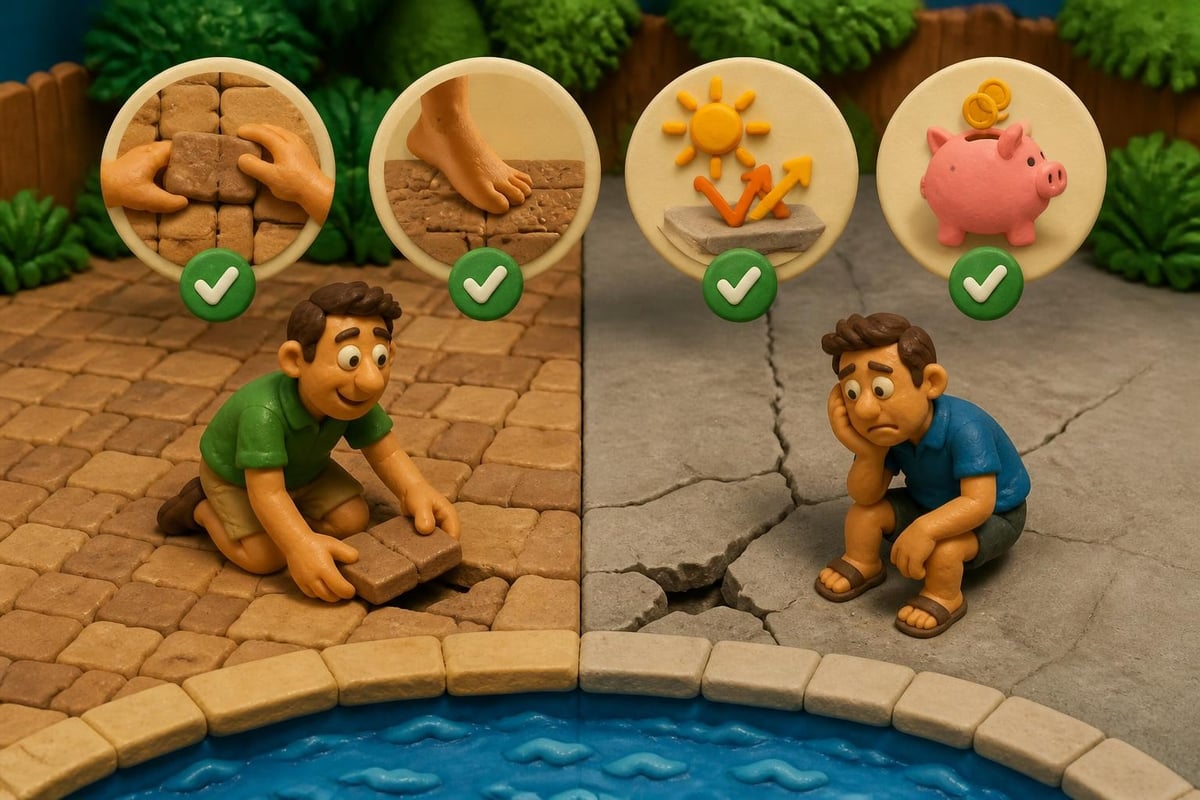
The shift toward paver installations around pools reflects their practical advantages over poured concrete and other materials. Slip resistance ranks as the primary safety concern for any pool area, and pavers naturally provide superior traction even when wet. Their textured surfaces and joint patterns create friction that reduces the risk of falls, making them an excellent choice for families with children or elderly members.
Beyond safety, pavers handle thermal stress exceptionally well. Unlike concrete that can crack under Florida's extreme heat cycles, individual pavers expand and contract independently. This flexibility prevents the cracking and heaving that plague monolithic surfaces.
Maintenance accessibility represents another significant advantage. When a single paver becomes damaged or stained, you can replace just that unit rather than resurfacing the entire deck. This targeted repair approach saves considerable money over the lifespan of your pool area.
Immediate and Long-Term Benefits
Homeowners investing in pool deck pavers enjoy both instant gratification and lasting value:
- Instant usability: No extended curing time means you can use your pool deck immediately after installation
- Enhanced drainage: Joints between pavers allow water to flow through rather than pooling on the surface
- Increased home value: Quality hardscaping adds measurable resale value to properties
- Design flexibility: Countless color and pattern options complement any architectural style
- Reduced heat retention: Many paver materials stay cooler underfoot than concrete or stone slabs
The natural stone pool deck pavers available today combine engineering precision with aesthetic beauty, creating surfaces that perform as well as they look.
Material Options for Pool Deck Applications
Selecting the right material for your pool deck pavers requires balancing aesthetics, budget, and performance characteristics. Each material type offers distinct advantages suited to different needs and preferences.
Travertine Pavers
Travertine dominates the Florida pool deck market for compelling reasons. This natural limestone forms through mineral deposits at hot springs, creating a porous structure that delivers exceptional heat dissipation. The micro-porous structure of travertine helps these pavers stay noticeably cooler than other materials, even under direct summer sun.
Key characteristics of travertine:
- Cool surface temperature in hot weather
- Natural slip resistance from textured finish
- Available in earth tones including ivory, beige, and walnut
- Requires sealing for optimal performance
- Premium price point reflecting quality and longevity
Concrete Pavers
Manufactured concrete pavers provide versatility at a more accessible price point. Modern production techniques create incredibly realistic stone appearances while maintaining consistent dimensions for easier installation.
| Feature | Travertine | Concrete | Brick |
|---|---|---|---|
| Heat Resistance | Excellent | Good | Moderate |
| Slip Resistance | Excellent | Very Good | Good |
| Color Options | Limited Natural | Unlimited | Traditional Red/Brown |
| Price Range | $$$ | $$ | $$ |
| Maintenance | Moderate | Low | Moderate |
Concrete pavers excel in design flexibility, offering countless shapes, sizes, and color combinations. Manufacturers can replicate the appearance of natural stone, brick, or create contemporary geometric patterns that complement modern architecture.
Natural Stone Options
Beyond travertine, other natural stone pavers for pool decks include bluestone, granite, and sandstone. Each brings unique character and performance attributes to your outdoor space.
Bluestone provides a sophisticated appearance with its distinctive blue-gray coloring. Its dense composition resists staining and requires minimal maintenance. Granite offers unmatched durability and heat resistance, though it typically carries a higher price tag. Sandstone delivers warm, earthy tones and excellent traction but needs regular sealing to maintain its appearance.
Design Considerations and Layout Patterns
Creating an exceptional pool deck involves more than selecting quality materials. Thoughtful design transforms functional space into an inviting outdoor living area that enhances your entire property.
Popular Layout Patterns
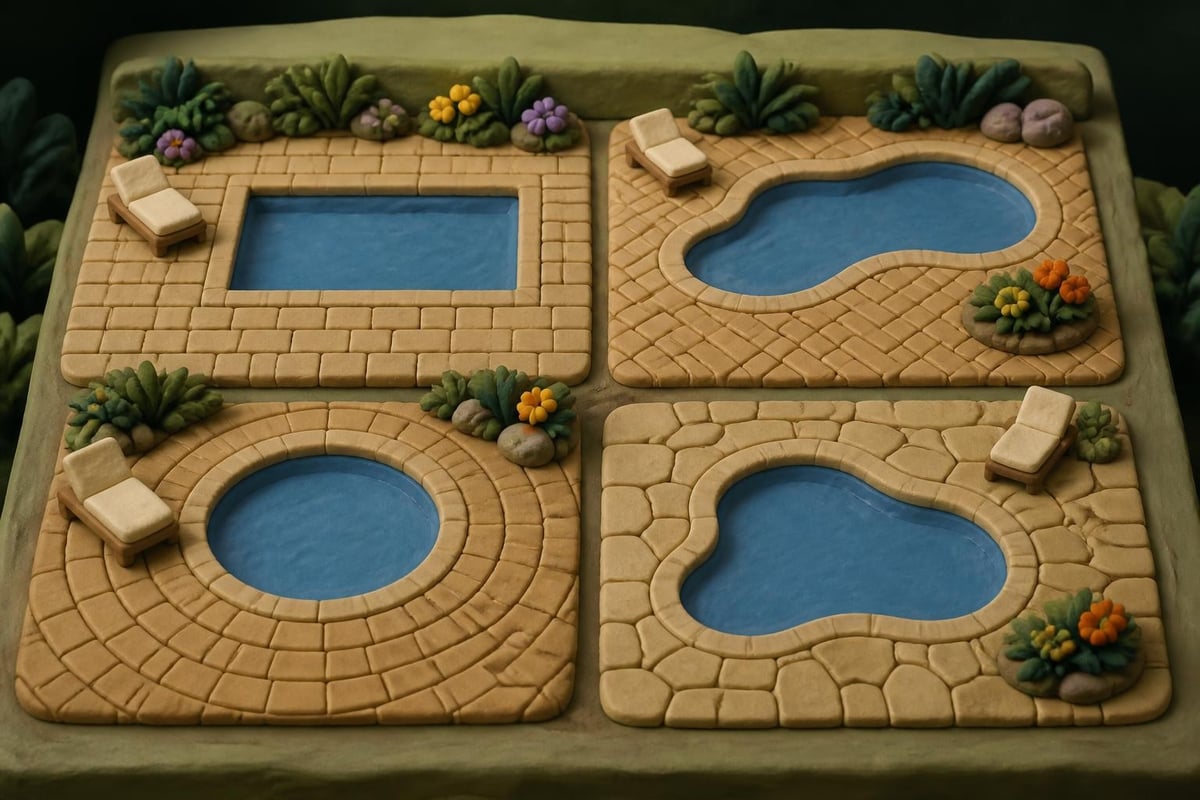
The arrangement of your pool deck pavers dramatically impacts the final aesthetic. Running bond patterns create clean, linear designs that elongate spaces, making them ideal for rectangular pools or narrow decking areas. Herringbone layouts add visual interest and structural stability, particularly effective for high-traffic zones around pool entries.
Circular and radial patterns work beautifully for curved pool edges or to define spa areas. These designs require skilled installation but deliver stunning results that become focal points of your backyard. Random patterns using mixed sizes create natural, organic appearances perfect for tropical or Mediterranean themes.
Border Treatments and Accents
Strategic border design frames your pool deck and creates visual separation from lawn or garden areas. Contrasting colors or materials define the pool edge, enhancing safety by clearly marking the transition from deck to water.
Consider these border approaches:
- Soldier course borders: Pavers laid perpendicular to the field create formal edges
- Contrasting color bands: Two or three rows in different colors define zones
- Mixed material accents: Combine brick borders with travertine fields for texture variety
- Integrated lighting: LED-lit pavers create safety and ambiance for evening swimming
Sizing and Coverage Planning
Proper planning prevents material shortages and budget overruns. Calculate your deck area carefully, accounting for irregular shapes around pool equipment, stairs, and landscaping features. Add 10-15% extra material to your order to cover cutting waste, future repairs, and pattern matching.
Standard paver sizes range from small 4×8-inch units to large 24×24-inch slabs. Larger pavers reduce joint lines for cleaner appearances and faster installation, while smaller units offer more pattern flexibility and easier radius work around curved pools.
Installation Process and Best Practices
Quality installation determines whether your pool deck pavers perform properly for decades or develop issues within years. The foundation preparation and setting techniques matter as much as the pavers themselves.
Foundation Requirements
Successful paver installations begin with proper base preparation. In Central Florida's sandy soils, this typically involves:
- Excavation: Remove existing material to proper depth (typically 8-10 inches)
- Base layer: Install 4-6 inches of crushed stone compacted in lifts
- Leveling sand: Add 1 inch of coarse sand screeded to precise grade
- Edge restraint: Secure perimeter with commercial restraints or concrete curbing
The base must provide adequate drainage while remaining stable under foot traffic and furniture weight. Proper compaction at each layer prevents settling that causes uneven surfaces and trip hazards. For homeowners throughout Central Florida, working with licensed contractors ensures installations meet local building codes and drainage requirements.
Setting and Finishing Steps
Once the foundation is prepared, installation proceeds through systematic steps:
- Layout and pattern establishment: Begin from prominent edges or focal points
- Paver placement: Set units tightly together, checking alignment frequently
- Cutting and fitting: Trim edge pieces for clean borders and obstacle clearance
- Joint filling: Sweep polymeric sand into gaps and activate per manufacturer instructions
- Sealing: Apply penetrating sealer to enhance color and protect surfaces
Polymeric sand plays a crucial role in paver performance. This specially formulated material contains polymers that harden when activated with water, creating a semi-rigid joint that resists erosion, weed growth, and insect infiltration.
Professional vs. DIY Installation
While experienced DIY enthusiasts can tackle smaller paver projects, pool deck installations present unique challenges. Proper drainage slopes away from pool structures, integration with coping and waterline tile, and compliance with local building codes require professional expertise. Companies offering paver installation bring specialized equipment, material sourcing advantages, and warranty protection that justify their involvement.
Professional installation typically includes precise elevation planning to prevent water from flowing toward your home or pooling on the deck surface. This expertise proves especially valuable in Florida's heavy rainfall climate.
Maintenance Requirements and Long-Term Care
Preserving the beauty and functionality of your pool deck pavers demands regular attention but remains far simpler than maintaining many alternative surfaces. Establishing a maintenance routine from the start protects your investment and keeps your outdoor space looking pristine.
Routine Cleaning Procedures
Weekly maintenance keeps pool deck pavers in excellent condition:
Weekly tasks:
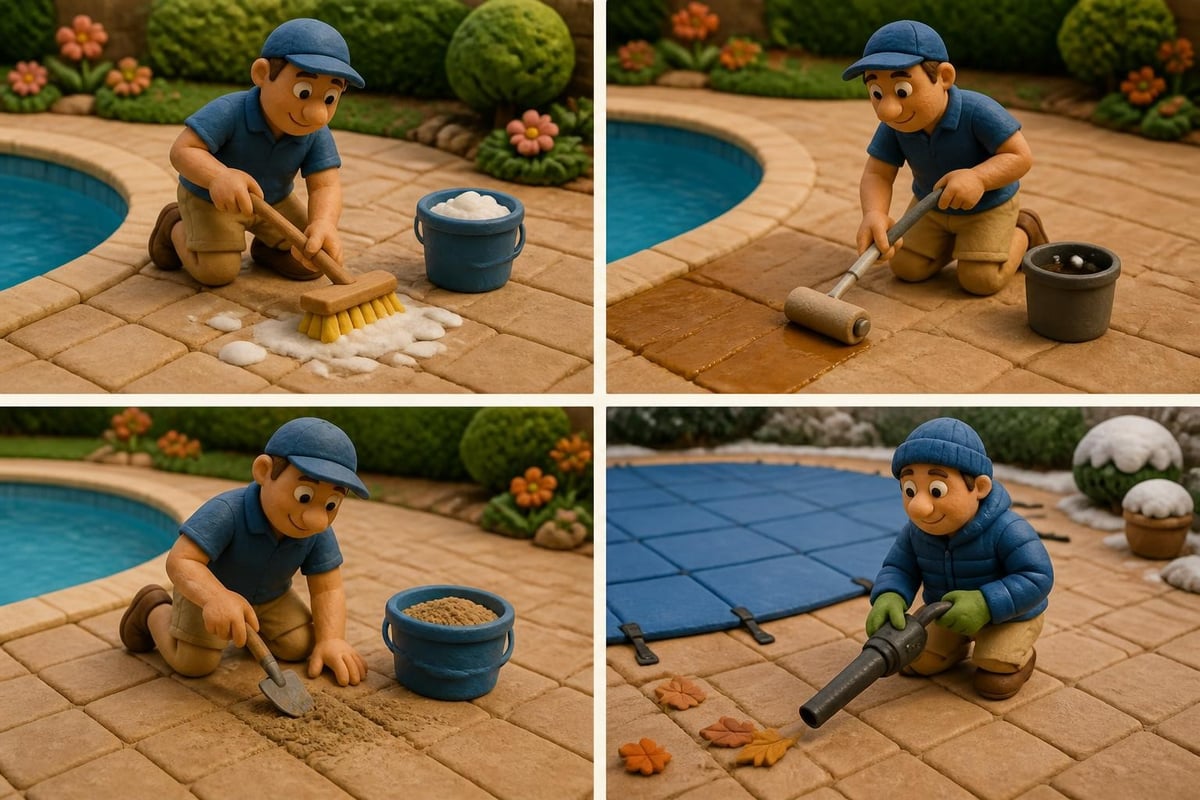
- Sweep or blow debris before it stains surfaces
- Rinse with garden hose to remove chlorinated water and chemicals
- Check for settled or uneven pavers requiring adjustment
Monthly attention:
- Pressure wash at low pressure (1200-1500 PSI) to remove embedded dirt
- Inspect joint sand levels and refill as needed
- Remove any vegetation beginning to grow in joints
- Clean and treat any visible stains promptly
Sealing for Protection and Enhancement
Applying quality sealer protects pool deck pavers from staining, fading, and moisture damage while enhancing color vibrancy. The design flexibility of paver pool decks extends to finishing options, with sealers available in natural matte finishes or wet-look gloss appearances.
| Sealer Type | Benefits | Reapplication Frequency | Best For |
|---|---|---|---|
| Penetrating | Natural appearance, breathable | 3-5 years | Travertine, natural stone |
| Film-forming | Enhanced color, glossy finish | 2-3 years | Concrete pavers |
| Water-based | Eco-friendly, easy application | 2-4 years | All paver types |
| Solvent-based | Maximum protection, deep penetration | 3-5 years | High-traffic areas |
New installations should cure for 60-90 days before initial sealing. This allows efflorescence (mineral salt deposits) to emerge and be cleaned before sealing locks them beneath the surface.
Addressing Common Issues
Even well-maintained pool deck pavers occasionally develop problems requiring attention:
Settling or unevenness: Lift affected pavers, add base material, and reset to proper grade. This common issue results from inadequate compaction or erosion beneath the surface.
Staining: Organic stains from leaves or algae respond to oxygen bleach treatments. Rust stains require specialized cleaners containing oxalic acid. Always test cleaning products on inconspicuous areas first.
Joint erosion: Heavy rain or pressure washing can wash out joint sand. Refill with polymeric sand and reactivate according to product instructions.
Cost Factors and Investment Value
Understanding the financial aspects of pool deck pavers helps homeowners budget appropriately and recognize the long-term value these surfaces provide. Initial costs represent only part of the total ownership picture.
Material and Installation Pricing
Pool deck paver costs vary significantly based on material selection, project complexity, and regional labor rates. In Central Florida markets including Orlando, Winter Park, and Clermont, homeowners can expect the following approximate ranges for complete installations:
Budget-friendly options ($8-$12 per square foot):
- Standard concrete pavers in basic colors
- Simple running bond patterns
- Minimal border treatments
Mid-range selections ($12-$18 per square foot):
- Textured or tumbled concrete pavers
- Natural stone replicas
- Pattern complexity with borders
Premium installations ($18-$30+ per square foot):
- Imported travertine or exotic stone
- Intricate patterns and custom designs
- Multiple border treatments and accents
These estimates include base preparation, material, labor, edge restraints, joint sand, and basic sealing. Additional features like integrated lighting, heating systems, or extensive grading work increase total project costs.
Return on Investment
Quality pool deck pavers deliver measurable financial returns beyond aesthetic improvements. Real estate professionals consistently cite well-designed hardscaping as a key factor in property valuations and buyer appeal.
Documented benefits include:
- 70-80% return on investment at resale for quality hardscaping
- Faster property sales due to enhanced curb appeal
- Reduced maintenance costs versus concrete replacement
- Lower cooling costs from heat-reflective paver materials
- Extended usable outdoor living space increasing home functionality
The safety features of pool deck pavers also provide non-monetary value through reduced accident risk and increased peace of mind for families with young children or elderly residents.
Climate-Specific Considerations for Florida
Central Florida's subtropical climate presents unique challenges and opportunities for pool deck paver selection and installation. Understanding these regional factors ensures your investment performs optimally year-round.
Heat Management Strategies
Summer temperatures regularly exceed 95°F, making surface temperature a critical consideration. Traditional concrete can reach temperatures above 140°F, creating uncomfortable and potentially dangerous conditions for bare feet. The cool-touch properties of travertine and marble make them particularly suitable for Florida installations.
Heat mitigation approaches include:
- Selecting light-colored pavers that reflect rather than absorb solar radiation
- Choosing materials with high thermal mass that dissipate heat quickly
- Installing pavers with textured finishes that reduce surface contact
- Adding shade structures over high-traffic deck areas
- Incorporating water features that cool surrounding surfaces through evaporation
Light colors work especially well in Florida, where bright sunshine dominates most days. Ivory, beige, and light gray pavers remain comfortable even during peak afternoon heat.
Drainage and Water Management
Florida's heavy rainfall and high water table require exceptional drainage planning. Pool deck pavers naturally accommodate water movement through joint spacing, but proper installation ensures water flows away from pool structures and home foundations.
Professional installations incorporate:
- Minimum 2% slope away from pool and structures
- Permeable base layers allowing vertical water infiltration
- French drains or catch basins in low areas prone to standing water
- Proper joint spacing (typically 1/8 to 1/4 inch) for water passage
Areas around Sanford and Apopka with higher water tables may require additional drainage infrastructure to prevent hydrostatic pressure from displacing pavers during heavy rain events.
Hurricane and Weather Resistance
Unlike loose materials that hurricanes can scatter, properly installed pool deck pavers remain secure during severe weather. The interlocking design and edge restraints create a unified surface that resists displacement from high winds. However, ensure patio furniture and decorative elements are secured or stored during tropical systems to prevent them from damaging your pavers.
Post-storm maintenance typically involves sweeping debris, inspecting for any displaced units, and checking joint sand levels. The resilience of paver systems means most pool decks emerge from hurricanes requiring only minor attention.
Enhancing Functionality With Complementary Features
Maximizing your pool deck's utility involves integrating features that extend usability, improve comfort, and create true outdoor living spaces. Modern pool areas function as entertainment venues, relaxation zones, and family gathering spots that rival indoor rooms in comfort and appeal.
Outdoor Kitchens and Dining Areas
Expanding your pool deck to accommodate cooking and dining transforms it into a complete outdoor entertainment space. Built-in grills, refrigeration, and prep counters allow you to prepare and serve meals without constantly returning indoors. The non-slip surfaces of paver pool decks provide safe flooring even when wet from pool splashing or food preparation.
Design considerations for integrated kitchens include adequate space for movement between cooking and pool areas, proper drainage around sink and grill locations, and electrical planning for appliances and lighting.
Fire Features and Ambient Lighting
Florida's mild winters make year-round pool use feasible with proper heating and ambiance. Fire pits or fireplaces provide warmth for cool evenings while creating focal points for gathering. The heat-resistant nature of quality pavers allows safe placement of fire features with appropriate clearances.
Lighting options enhance both safety and atmosphere:
- LED strip lighting along step edges and borders
- Paver-integrated uplights highlighting landscape features
- Post-mounted path lights guiding movement
- Underwater pool lighting complementing deck illumination
- Smart lighting systems offering color changing and programmable scenes
Furniture Zones and Shade Structures
Defining separate areas within larger pool decks creates organized, purposeful spaces. Lounge zones with comfortable seating, dining areas with tables, and active play spaces each serve distinct functions. Using different paver patterns or colors subtly delineates these zones without requiring physical barriers.
Pergolas, pavilions, and shade sails protect portions of your deck from intense sun while adding architectural interest. When planning shade structures, consider their impact on sight lines, wind patterns, and afternoon sun angles specific to your property orientation.
Specialized Applications and Unique Situations
Not all pool deck projects follow standard rectangular layouts around traditional in-ground pools. Specialized situations require adapted approaches that maintain paver advantages while accommodating unique constraints.
Rooftop and Elevated Deck Installations
Urban properties and multi-story homes sometimes place pools on elevated structures or rooftops. These applications demand lightweight paver options and enhanced drainage planning. Pedestal systems elevate pavers above waterproof membranes, creating void spaces for water movement and utility access.
Weight becomes the primary concern for elevated installations. Concrete pavers weigh approximately 20-25 pounds per square foot when installed with full base preparation. Lighter alternatives include porcelain pavers or specialized composite materials that reduce structural loads while maintaining appearance and durability.
Integration With Existing Landscapes
Retrofitting pool deck pavers into established yards requires careful planning around existing trees, gardens, and hardscaping. Root systems from mature trees can disrupt paver surfaces if not properly accommodated. Creating flexible zones around tree trunks using smaller pavers or adjustable spacing allows for root expansion without compromising surface integrity.
Transitioning between different surface materials demands attention to elevation changes and visual flow. Step designs, border treatments, and complementary colors help blend paver pool decks with existing patios, walkways, or lawn areas.
Infinity Edges and Vanishing Edge Pools
Contemporary infinity edge pools create dramatic visual effects but present installation challenges at the vanishing edge. Paver selection and layout must account for water overflow and the mechanical systems managing water return. Cantilevered coping pavers extend over catch basins while maintaining the illusion of water flowing to the horizon.
These sophisticated designs benefit most from professional design and installation expertise that coordinates pool construction with hardscape elements for seamless integration.
Pool deck pavers deliver unmatched safety, durability, and aesthetic flexibility for Central Florida homeowners seeking to enhance their outdoor living spaces. From material selection through long-term maintenance, understanding these elements helps you create a pool area that serves your family beautifully for decades. Whether you're planning a new installation or considering restoration for an existing deck, Pink Palm Pavers brings licensed expertise, quality materials, and a 2-year warranty to every project across Orlando and surrounding communities. Contact us today to transform your pool area into the backyard oasis you've envisioned.

