

Homeowners seeking a sophisticated, naturally beautiful entrance to their property increasingly turn to sandstone driveway pavers as their material of choice. These natural stone pavers combine timeless aesthetics with remarkable durability, creating driveways that enhance curb appeal while standing up to daily vehicle traffic. Unlike concrete or asphalt, sandstone offers unique color variations, textures, and patterns that make each installation one-of-a-kind. For Central Florida residents looking to invest in premium hardscaping that performs well in humid, high-temperature conditions, understanding the characteristics and benefits of sandstone becomes essential for making an informed decision.
Why Sandstone Stands Out Among Natural Stone Options
Sandstone driveway pavers deliver a distinctive appearance that concrete and manufactured pavers simply cannot replicate. The natural formation process creates unique color variations ranging from warm beiges and tans to rich golds and reddish-browns, with each paver displaying its own character. Natural stone driveway options provide aesthetic flexibility that complements various architectural styles, from Mediterranean estates to contemporary homes.
The material's inherent non-slip surface offers practical safety benefits, particularly important for Florida's frequent rain showers. Sandstone naturally provides excellent traction even when wet, reducing the risk of slips and falls. This textured surface develops through geological processes over millions of years, creating micro-patterns that channel water away while maintaining grip.
Durability characteristics that set sandstone apart:
- High compressive strength capable of supporting multiple vehicles daily
- Resistance to heat absorption, staying cooler underfoot than dark asphalt
- Natural porosity that allows for proper drainage and reduces water pooling
- Minimal expansion and contraction during temperature fluctuations
- Resistance to UV degradation that keeps colors vibrant for decades
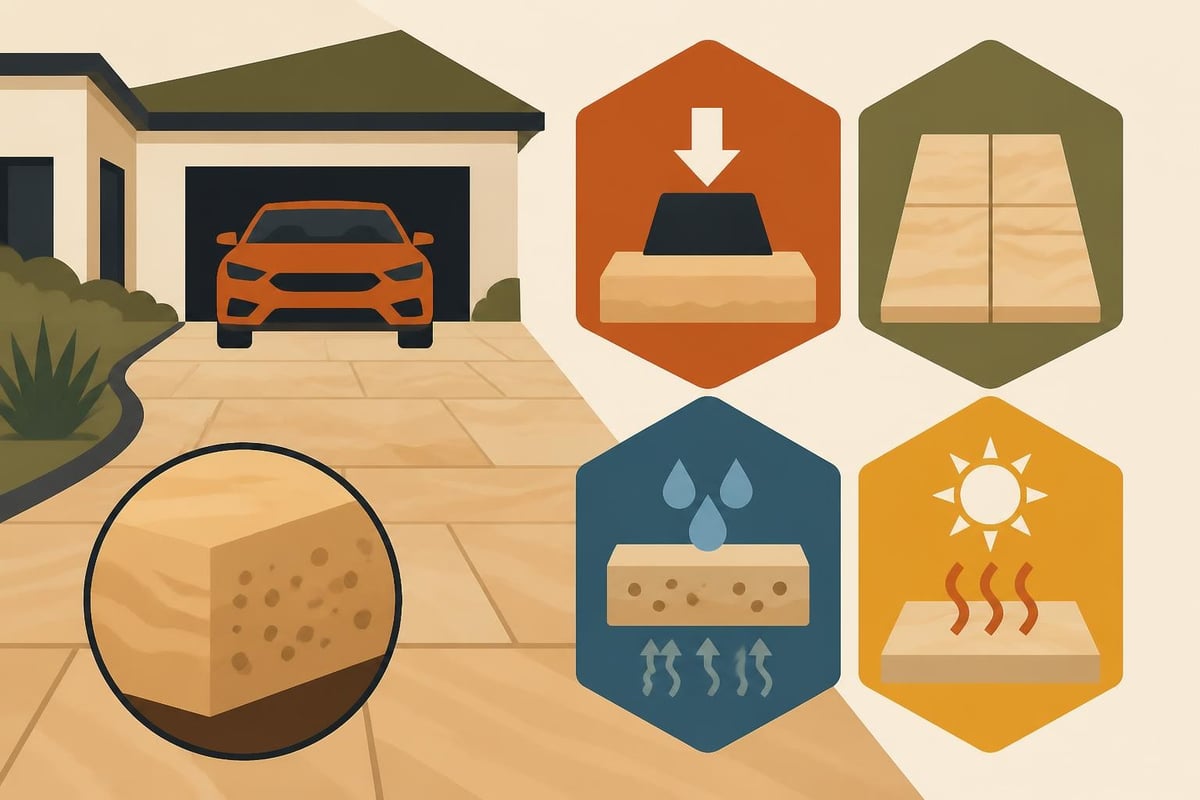
Central Florida homeowners particularly benefit from sandstone's thermal properties. Unlike dark-colored materials that absorb and retain heat, sandstone in lighter shades reflects sunlight, maintaining more comfortable surface temperatures during hot summer months. This quality makes barefoot walks from driveway to front door far more pleasant.
Design Flexibility and Aesthetic Considerations
Sandstone driveway pavers offer remarkable versatility in creating distinctive patterns and layouts. The natural variation in each stone means no two driveways look identical, providing exclusivity that manufactured pavers cannot match. Homeowners can choose from various cutting styles, edge treatments, and laying patterns to achieve their desired aesthetic.
Popular Pattern Options
| Pattern Name | Visual Effect | Best Application |
|---|---|---|
| Running Bond | Classic, orderly appearance | Traditional homes, straight driveways |
| Herringbone | Dynamic, interlocking design | High-traffic areas, curved driveways |
| Random Ashlar | Natural, organic look | Rustic or cottage-style homes |
| Basket Weave | Textured, woven appearance | Shorter driveways, focal areas |
| European Fan | Elegant, radiating pattern | Circular driveways, entrance features |
The selection of finish profoundly impacts both appearance and functionality. Sandstone pavers come in several surface treatments that alter their character and performance. Natural cleft finishes preserve the raw, textured surface as it splits from quarried stone, offering maximum slip resistance and rustic charm. Honed finishes provide a smooth, matte surface with minimal texture, suitable for more formal settings. Thermal finishes create a slightly rougher texture through high-heat treatment, balancing aesthetics with traction.
Color coordination with existing home elements creates visual harmony across the property. Sandstone's natural earth tones generally complement brick, stucco, wood siding, and stone facades. Lighter sandstone shades brighten darker homes, while richer tones add warmth to lighter exteriors. Consider how existing landscape services elements like garden beds, walkways, and outdoor living areas will coordinate with your driveway choice.
Size and Thickness Selection
Choosing appropriate paver dimensions ensures structural integrity and aesthetic balance. Residential driveways typically use sandstone pavers ranging from 18 to 24 inches in length and width, though dimensions vary based on pattern and supplier. Thickness requirements differ from pedestrian applications, as driveways must support significant weight loads.
Recommended thickness specifications:
- Light residential traffic: 1.5 to 2 inches minimum
- Standard residential use: 2 to 2.5 inches (most common)
- Heavy vehicle traffic: 2.5 to 3 inches for added durability
Smaller paver sizes create more grout lines, which can enhance slip resistance but require more maintenance to prevent weed growth. Larger format pavers reduce the number of joints, creating a more seamless appearance with fewer areas requiring attention over time.
Installation Requirements and Base Preparation
Proper installation determines whether sandstone driveway pavers perform well for decades or develop problems within years. The base preparation process proves critical, particularly in Central Florida's sandy soils and high water table conditions. Unlike simply pouring concrete, paver installation requires meticulous attention to drainage, compaction, and leveling.
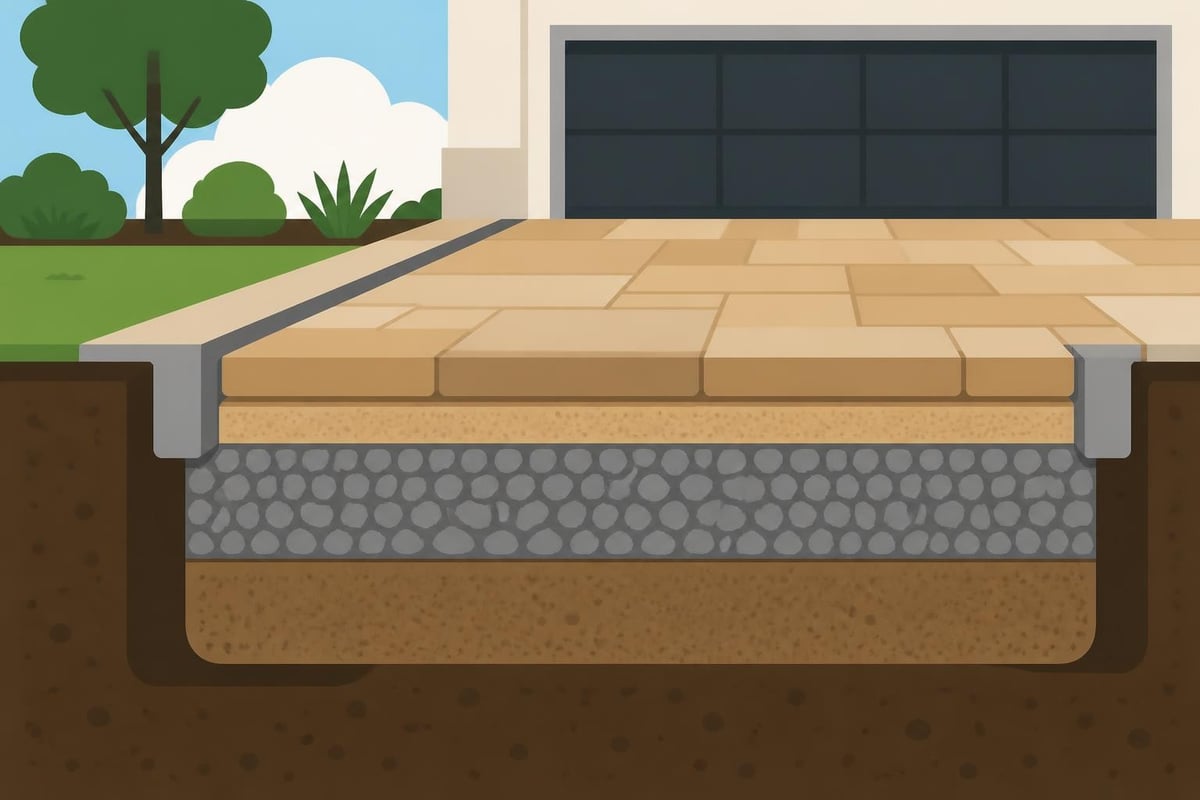
The base typically consists of multiple layers working together to distribute weight loads and manage water movement. A compacted subgrade forms the foundation, followed by a crushed stone base layer that provides structural support and drainage capacity. The bedding layer, usually consisting of coarse sand, allows for fine-tuning of paver elevation and facilitates proper drainage through the system.
Critical Installation Steps
- Excavation and grading – Remove existing materials and establish proper slope for water runoff, typically 2% grade minimum
- Geotextile fabric installation – Prevent soil migration into base materials while allowing water passage
- Base material placement – Install and compact crushed stone in lifts, typically 4-6 inches total depth
- Edge restraint installation – Secure perimeter to prevent lateral paver movement over time
- Bedding layer preparation – Spread and level sand base to exact specifications
- Paver placement – Set stones according to pattern, maintaining consistent joint spacing
- Joint filling – Sweep polymeric sand into gaps, compact, and activate with water
Climate considerations affect installation timing and techniques in Florida. Installing during dry seasons prevents moisture-related complications during base preparation. High humidity requires special attention to polymeric sand activation, as manufacturers specify optimal temperature and moisture conditions for proper curing.
Working with experienced professionals familiar with paver installation in Central Florida ensures compliance with local building codes and proper adaptation to regional soil conditions. Licensed contractors understand drainage requirements specific to areas like Sanford and Winter Park, where water management proves crucial.
Performance in Central Florida Conditions
Florida's subtropical climate presents unique challenges for hardscaping materials. Sandstone driveway pavers must withstand intense UV exposure, heavy rainfall, high humidity, and temperature swings. Understanding how this natural material responds to these conditions helps homeowners make informed maintenance decisions and set realistic performance expectations.
The material's natural porosity provides both advantages and considerations. Water absorption capacity varies among different sandstone varieties, with some types being more porous than others. Research on sandstone moisture behavior shows that the material responds to environmental humidity changes, though properly sealed pavers resist moisture-related degradation effectively.
Climate performance characteristics:
- Heat resistance – Lighter sandstone colors reflect rather than absorb solar radiation, staying substantially cooler than asphalt
- Freeze-thaw immunity – Not a concern in Central Florida's frost-free climate
- Drainage capability – Permeable joints between pavers allow water infiltration, reducing runoff and pooling
- UV stability – Natural stone colors remain stable under intense sunlight exposure
- Organic growth resistance – Sealed surfaces resist mold, mildew, and algae accumulation
Heavy rainfall events test any driveway material's drainage capacity. The joint spacing between sandstone pavers creates channels for water movement, preventing the surface flooding common with solid concrete driveways. This permeability proves particularly valuable during Florida's summer thunderstorm season when several inches of rain can fall within hours.
Comparing Natural Stone to Manufactured Options
| Feature | Sandstone Pavers | Concrete Pavers | Brick Pavers |
|---|---|---|---|
| Appearance | Unique, natural variations | Uniform, manufactured consistency | Consistent, traditional look |
| Color stability | Excellent, permanent color | Moderate, surface color can fade | Good, fired-in color |
| Heat reflection | Superior with light colors | Variable by color | Moderate heat absorption |
| Repairability | Individual paver replacement | Individual paver replacement | Individual paver replacement |
| Initial cost | Higher investment | Moderate cost | Moderate to high |
| Lifespan | 50+ years with maintenance | 25-50 years | 25-40 years |
Maintenance Requirements and Long-term Care
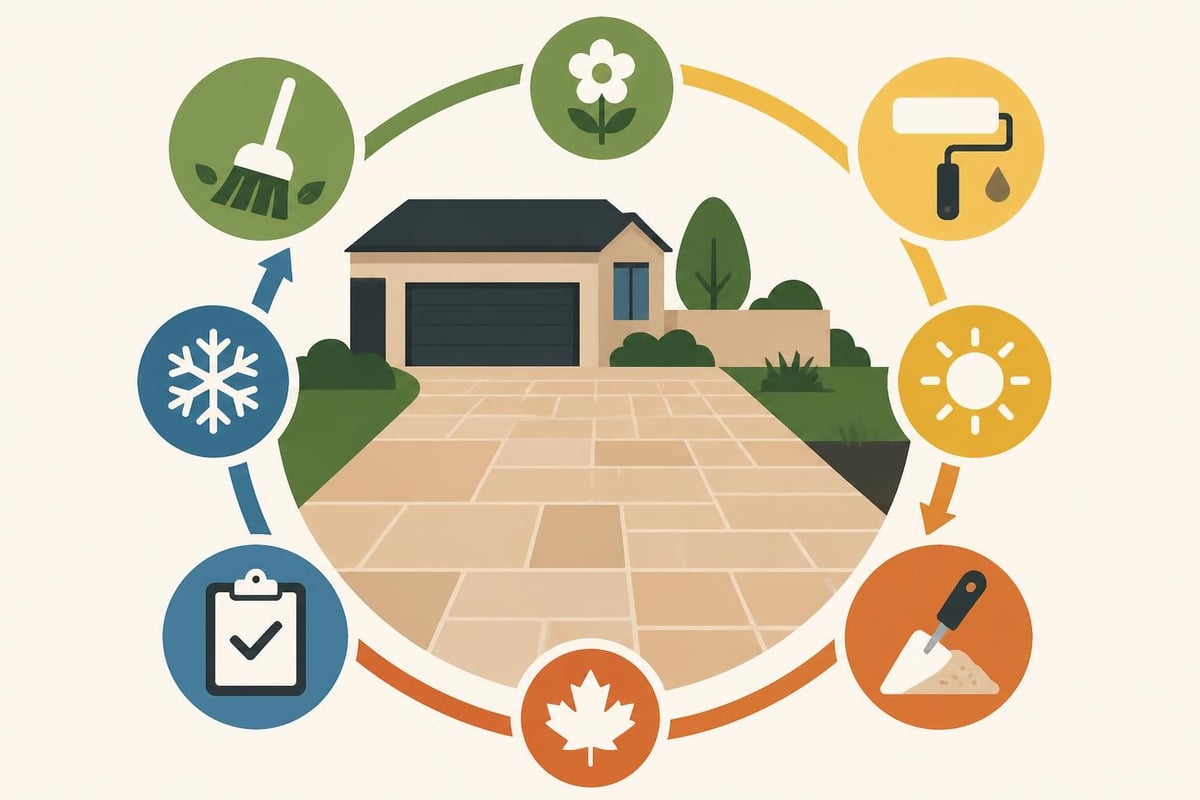
Preserving the beauty and functionality of sandstone driveway pavers requires consistent maintenance practices tailored to the material's characteristics. Unlike concrete that simply needs occasional pressure washing, natural stone benefits from specific care routines that protect its surface and enhance longevity. Professional paver restoration and maintenance services address deep cleaning, sealing, and repairs that extend the life of your investment.
Regular cleaning prevents organic material accumulation that can lead to discoloration and surface degradation. Sweeping weekly removes loose debris that scratches the surface when vehicles drive over it. Monthly rinsing with a garden hose washes away dirt, pollen, and other contaminants before they bond to the stone surface. Quarterly deep cleaning addresses more stubborn stains and buildup.
Sealing Recommendations
Penetrating sealers provide optimal protection for sandstone driveway pavers by filling microscopic pores without creating a surface film that can peel or wear away. These sealers repel water, oil, and other contaminants while allowing the stone to breathe naturally. Application frequency depends on traffic levels, weather exposure, and sealer quality.
Typical sealing schedule:
- Initial application immediately after installation and joint sand curing
- Reapplication every 2-3 years for standard residential traffic
- Annual inspection to assess sealer performance and coverage
- Touch-up applications in high-traffic zones as needed
Quality sealers enhance color vibrancy, bringing out the natural richness of sandstone tones. Some homeowners prefer natural enhancing sealers that deepen colors, while others choose non-enhancing formulas that maintain the stone's original appearance. Testing sealer types on spare pavers helps determine which aesthetic you prefer before committing to the entire driveway.
Addressing minor issues promptly prevents major repairs. Individual sandstone pavers can crack from concentrated impact or develop chips along edges. The modular nature of paver systems allows for straightforward replacement of damaged units without disturbing surrounding stones. Keeping several spare pavers from the original installation ensures perfect color matching for future repairs.
Joint sand maintenance preserves the integrity of the entire driveway system. Polymeric sand locks pavers in place while resisting erosion from rain and pressure washing. Over time, joint sand can wash out or settle, creating gaps that allow weed growth and paver movement. Annual inspection and replenishment maintain proper joint fill and system stability.
Cost Considerations and Investment Value
Understanding the financial aspects of sandstone driveway pavers helps homeowners budget appropriately and recognize the long-term value proposition. Initial installation costs exceed concrete or asphalt alternatives, but evaluating total lifetime expenses reveals a more complete picture. The investment includes material costs, professional installation labor, ongoing maintenance, and the property value enhancement these premium pavers provide.
Material prices vary significantly based on sandstone type, source location, finish treatment, and current market conditions. Domestic sandstone from American quarries typically costs less than imported varieties, though specific characteristics may justify premium pricing for certain applications. MSI’s natural stone paver collections demonstrate the range available in contemporary markets, with options spanning various price points and aesthetic preferences.
Budget Planning Framework
| Cost Component | Typical Range (2026) | Factors Affecting Price |
|---|---|---|
| Sandstone material | $8-$18 per square foot | Type, finish, thickness, source |
| Base materials | $2-$4 per square foot | Depth requirements, soil conditions |
| Professional installation | $6-$12 per square foot | Site access, pattern complexity, regional labor rates |
| Sealing and finishing | $1-$3 per square foot | Sealer quality, number of coats |
| Edge treatments | $15-$30 per linear foot | Material choice, design complexity |
A typical residential driveway of 600 square feet might require an investment of $10,000 to $20,000 for complete sandstone paver installation, depending on material selection and site-specific factors. This represents approximately double the cost of standard concrete but delivers substantially greater aesthetic appeal and comparable longevity when properly maintained.
Return on investment manifests through multiple channels beyond pure dollars. Curb appeal enhancement from premium sandstone driveway pavers makes properties more attractive to potential buyers, often shortening time on market. Real estate professionals consistently identify quality hardscaping as a feature that differentiates listings and supports higher asking prices. The distinctive appearance and craftsmanship signal overall property quality to prospective buyers.
Selecting the Right Sandstone Variety
Different sandstone types offer varying characteristics in color, hardness, porosity, and performance attributes. Geographical origin influences these properties, as formation conditions create distinct material personalities. Understanding these differences helps match the appropriate variety to your specific needs, traffic expectations, and aesthetic preferences.
Grey sandstone varieties provide contemporary elegance with neutral tones that complement modern architecture. Promenade De Terra grey sandstone pavers exemplify this category, offering high compressive strength and excellent freeze-thaw resistance, though the latter proves less relevant in Florida's climate. These cooler tones pair beautifully with metal accents, glass features, and minimalist landscaping.
Warm-toned sandstone in beiges, golds, and tans creates inviting, traditional aesthetics that suit Mediterranean, Spanish Colonial, and Craftsman-style homes. These earth tones harmonize naturally with Florida's lush vegetation and create visual warmth year-round. Color stability in these varieties remains excellent, as the pigments result from mineral content rather than surface treatments.
Regional sandstone characteristics:
- Arizona sandstone – Warm red and orange tones, moderate hardness, distinctive southwestern character
- Colorado sandstone – Buff to cream colors, excellent durability, consistent texture
- Pennsylvania sandstone – Blue-grey tones, exceptional hardness, fine grain structure
- Indian sandstone – Wide color range, economical pricing, variable quality grades
- Australian sandstone – Golden tones, proven durability in outdoor applications, consistent quality
Hardness ratings affect performance expectations and maintenance requirements. Denser, harder sandstone varieties resist surface wear more effectively but may cost more initially. Softer varieties still provide adequate durability for residential driveways while offering easier cutting and shaping during installation. Discussing expected traffic levels with suppliers helps identify appropriate hardness grades for your situation.
Sandstone cobblestone pavers represent another design option, offering smaller, cube-shaped units that create Old World European character. These work exceptionally well for curved driveway sections, decorative borders, and transition areas between different hardscape elements. Their smaller size increases installation labor but delivers unmatched design flexibility.
Environmental and Sustainability Aspects
Environmentally conscious homeowners appreciate natural stone's inherent sustainability advantages. Sandstone driveway pavers require no manufacturing process beyond quarrying and cutting, eliminating the energy-intensive production steps needed for concrete or brick pavers. This natural origin creates a smaller carbon footprint compared to manufactured alternatives, particularly when sourcing from domestic quarries that minimize transportation distances.
The permeable joint system between pavers supports better stormwater management than solid concrete driveways. Water infiltrates through gaps, recharging groundwater supplies rather than creating runoff that carries pollutants into storm drains and waterways. This permeability proves particularly valuable in Florida, where water conservation and aquifer protection remain ongoing environmental priorities.
Longevity itself represents a sustainability advantage. Materials lasting 50 years or more avoid the environmental costs of replacement, including demolition waste, new material production, and repeated installation impacts. When sandstone pavers eventually require replacement, the natural stone can be repurposed for other landscape applications, crushed for aggregate, or returned to the earth without introducing synthetic materials into the environment.
Heat island effect reduction benefits from lighter sandstone colors that reflect rather than absorb solar radiation. Urban areas suffer from elevated temperatures when dark surfaces absorb and re-radiate heat. Choosing light-colored sandstone for driveways helps moderate this effect, contributing to more comfortable outdoor temperatures around your home.
Working with Professional Installers
The complexity of proper sandstone driveway paver installation makes professional expertise invaluable for achieving lasting results. Experienced contractors understand soil conditions, drainage requirements, base preparation techniques, and material-specific installation methods that ensure performance over decades. Attempting DIY installation without proper knowledge and equipment often leads to settling, drainage problems, and premature failure.
Qualified installers should demonstrate licensing, insurance coverage, and specific experience with natural stone pavers. Request references from recent projects and visit completed installations to assess workmanship quality firsthand. Evaluating the attention to detail in edge treatments, pattern execution, and joint consistency reveals professional competency levels.
Central Florida presents unique installation considerations that local expertise addresses effectively. Understanding regional soil types, water table levels, and drainage patterns informs proper base design and installation techniques. Companies serving areas like Orlando, Apopka, and Clermont develop specialized knowledge about conditions specific to these communities.
Communication throughout the project ensures alignment between homeowner expectations and installation realities. Professional contractors provide detailed proposals specifying materials, dimensions, base specifications, drainage provisions, and timeline estimates. Clear understanding of what the installation includes prevents misunderstandings and ensures satisfaction with the completed project.
Post-installation support distinguishes quality contractors from those simply completing jobs and moving on. Warranties covering workmanship and materials provide peace of mind and accountability. Guidance on proper maintenance practices helps homeowners protect their investment. Availability for future repairs or modifications maintains the long-term relationship that benefits both parties.
Sandstone driveway pavers represent a premium investment that delivers lasting beauty, durability, and property value enhancement for Central Florida homeowners who appreciate natural stone's distinctive character. From selecting the appropriate variety and planning proper installation to maintaining the surface through professional care, every decision impacts the long-term performance and appearance of your driveway. Pink Palm Pavers brings family-owned expertise and licensed craftsmanship to sandstone paver projects across the Orlando area, backed by a 2-year warranty and deep understanding of Central Florida's unique installation requirements. Whether you're planning a new driveway or exploring hardscape options for your property, our team delivers the quality workmanship and personalized service that transform outdoor spaces into beautiful, functional extensions of your home.

